
Almost every paint by numbers mistake can be fixed. Acrylic paint covers well once it is dry, so a wrong color, a slip over the line or a streaky patch usually needs nothing more than a thin coat of the correct paint. Only a few mistakes are hard to undo, and two minutes of preparation before you start prevents most of them.
The two problems our customers contact us about most are running short of paint and finding the paint dried out in a kit left unopened for a year or more. Both have their own sections below.
Quick Fix Table
| Problem | Likely cause | Quick fix |
|---|---|---|
| Wrong color in an area | Similar numbers or shades mixed up | Wet: lift with a damp brush. Dry: paint the correct color over it. |
| Numbers show through the paint | Pale color, single coat, paint too thin | Second thin coat once the first is dry |
| Can't see which number an area had | Painted over before checking | Compare with your photo of the blank canvas |
| Paint over the line | Too much paint on the brush | Let it dry, repaint the neighboring color over it |
| White gaps along lines | Paint stopped short of the printed line | Cover the line with the darker of the two colors |
| Ridges, lumps or streaks | Paint too thick, or brushing half-dry paint | Let dry, add one thin even coat |
| Smudged wet paint | Hand or sleeve resting on fresh paint | Let dry, repaint; work top to bottom |
| Thick or dried paint in a pot | Lid left open, or the kit stored for a long time | One drop of water at a time, or ask for replacement paint |
| Not enough paint for an area | Large area, several coats, paint thinned too much | Contact us for free replacement paint |
| Brush hair or dust in the paint | Worn brush, dusty workspace | Wet: lift with a toothpick. Dry: scrape the speck, repaint. |
| Missed areas or white specks | Small areas skipped | Check under side light the next day |
| Colors look different from the picture | Acrylic dries slightly darker; neighbors change how colors look | Judge only when dry and finished |
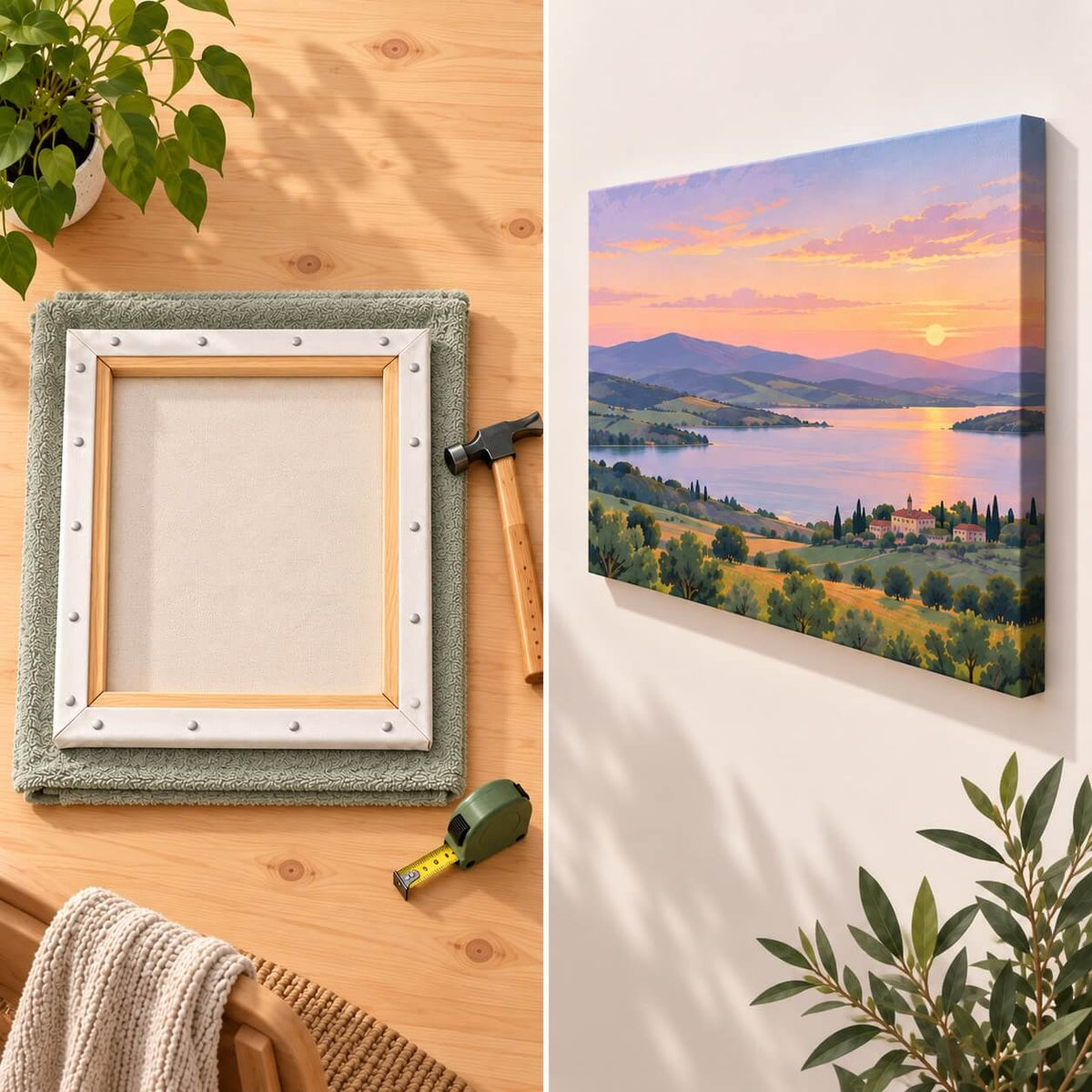
| Creases in the canvas | Canvas folded or rolled in transport | Flatten before painting |
| Cloudy or sticky varnish | Sealed too early or too thickly | Let it cure; follow the varnish label |
Mistakes Before You Start
Not Photographing the Blank Canvas
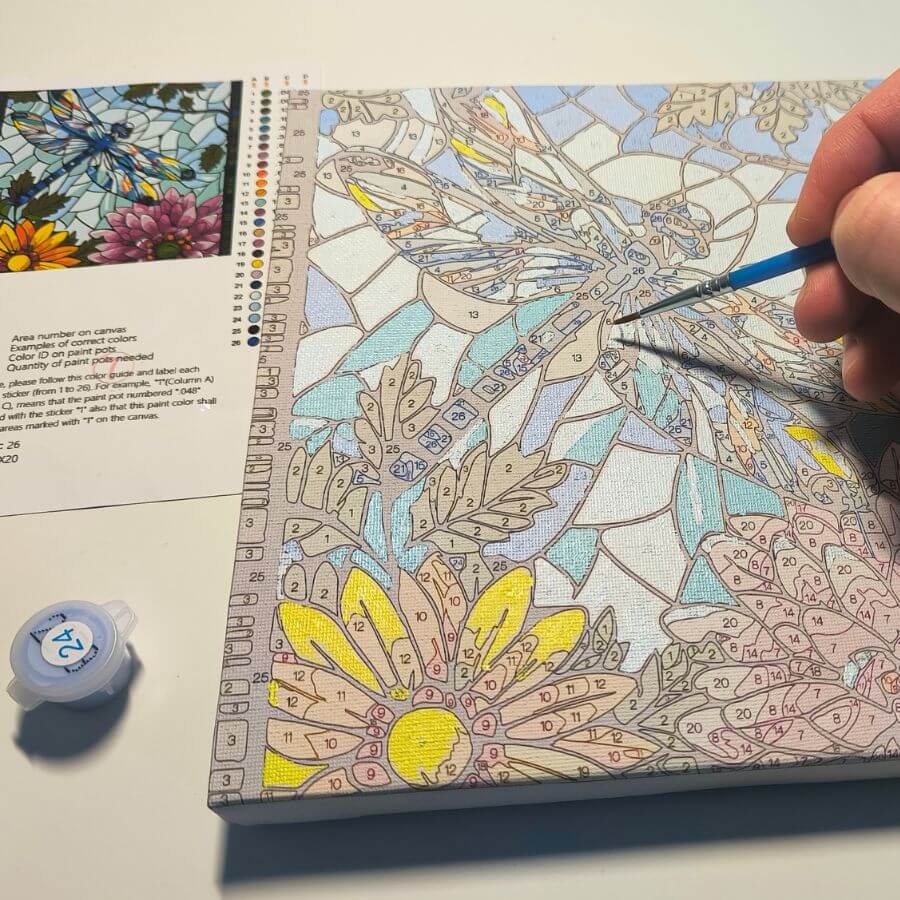
Once an area is painted, its number is gone. If you later suspect a wrong color, there is no way to check without a reference. Take a sharp photo of the whole canvas before the first stroke, plus close-ups of detailed parts. You can zoom in on your phone when numbers are tiny, and look up any area you have already covered.
Not Checking the Kit Right Away
A complete paint by numbers kit has one paint pot for every number in the color key. Count the pots, open each one briefly to check the paint is liquid, and compare the canvas with the reference sheet. A missing color, a damaged pot or a printing error is easy to sort out when you report it as soon as the kit arrives, and frustrating to discover halfway through a painting.
Losing Track of Which Pot Is Which
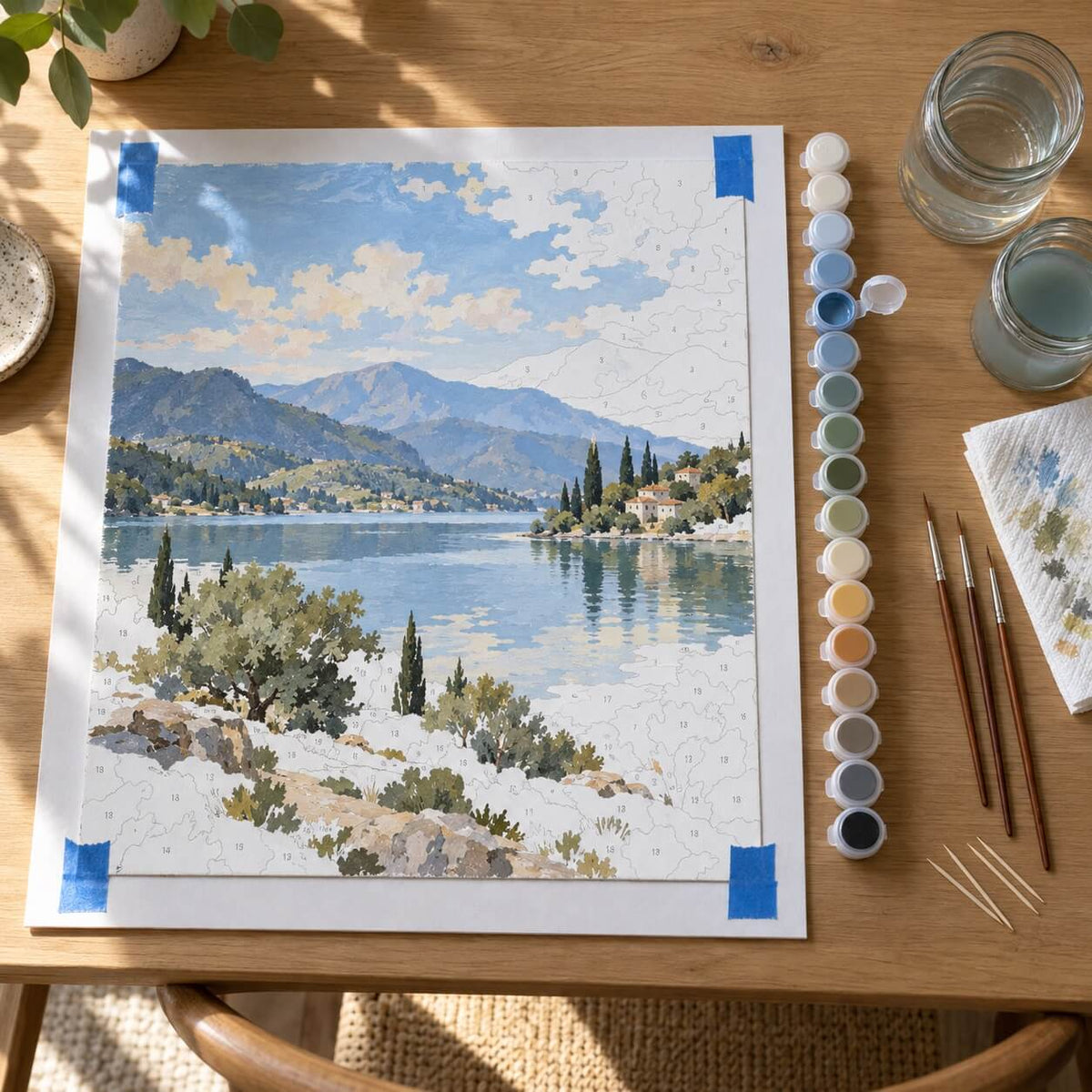
Numbers on pot labels can rub off with handling, especially on pots you open often. Write each number on the lid with a permanent marker, or photograph the row of pots in order, before you start.
Starting on a Creased Canvas
Creases make the brush skip and stay visible after the paint dries. Flatten the canvas first: see how to get wrinkles out of a canvas.
Leaving a Kit Unopened for Too Long
Acrylic paint in small pots slowly dries out, and a kit stored for more than a year often has thick or hardened colors. Paint that is only thick can usually be rescued with a drop of water. Paint that is rubbery or solid needs replacing. Our guide on fixing dried paint by numbers paint shows how to tell the difference. If you have a kit waiting, open it within a few months, or at least store it cool and out of the sun.
Mistakes While Painting
You Painted the Wrong Color
If the paint is still wet, rinse the brush, blot it, and lift the paint with the damp tip without rubbing. If it is dry, paint the correct color over it. A dark mistake under a pale color can need two or three thin coats, so let each coat dry before adding the next. Tip #8 in our paint by numbers tips walks through the correction step by step.
You Mixed Up 6 and 9
On our canvases, 6 and 9 are printed as plain digits without a dot or underline. To check which one you are looking at, compare it with the numbers around it and see which way they face. When in doubt, compare the area with the reference sheet. The same applies to pairs like 16 and 91 or 12 and 21 when the canvas is turned.
Paint Went Over the Line, or White Gaps Remain
Small slips over a line disappear when you paint the neighboring area, as long as the neighbor is darker. A light color painted over a dark slip needs extra coats. The opposite problem, thin white gaps between areas, comes from stopping short of the printed line. Cover the line with the darker of the two colors, which hides it in one coat.
The Numbers Still Show Through
This is normal after one coat of white, yellow, skin tones and other pale colors. Add a second thin coat once the first is dry. For stubborn areas, see how to cover lines and numbers in paint by numbers.
Ridges, Lumps and Streaks
Thick paint dries into ridges, and brushing paint that has started to set lifts it into rough patches. Stop as soon as the paint feels tacky, let it dry, then add one thin, even coat.
A Water Drop Fell on the Canvas
Water collects near the metal part of the brush and can drip onto the painting. Dab the drop off at once with a dry tissue, without wiping. Blot the brush on a paper towel every time you take it out of the water.
You Smudged Wet Paint
Let the smudge dry completely, then repaint both areas. To avoid it, work from the top of the canvas down and away from your painting hand, as explained in our guide on how to paint by numbers.
A Brush Hair or Dust Is Stuck in the Paint
While the paint is wet, lift the hair or speck out with the tip of a toothpick. Once dry, scrape just the speck off with a craft blade held flat and touch up the spot. A brush that sheds hairs regularly should be replaced.
You Are Running Out of a Color
Running short usually happens in large areas that need several coats, or when paint has been thinned too much. Don't mix a substitute for a large area: an exact match is hard and the difference shows once it dries. Instead, email support@paintingbynumbersshop.com or use our contact form with your order number, the color number, the design name and a photo of the pot. We send replacement paint free of charge.
Mistakes You Notice After Finishing
Missed Areas and White Specks
Wait until the next day, then tilt the canvas under a side light. Unpainted specks and uncovered numbers stand out clearly. Compare the canvas section by section with the reference sheet and touch up only what needs it.
The Colors Look Different From the Picture
Acrylic usually dries slightly darker than it looks wet, and a color can look different next to its neighbors than on its own. Judge the painting only when it is dry and complete. If a single area still looks wrong, check it against your photo of the blank canvas before repainting.
The Painting Looks Blocky
Paint by numbers is made of flat areas, so skies and water can look like a mosaic. Softening borders by blending neighboring colors while they are wet fixes this, but keep sharp edges around eyes, buildings and other defined shapes.
The Varnish Turned Cloudy or Sticky
Varnish applied before the paint fully dried, or in one heavy coat, can stay tacky or turn milky. Let it cure fully before judging it. Our guide on how to seal a paint by numbers painting explains the drying times and how many coats to use.
Popular "Fixes" to Avoid
- A white base coat over the whole canvas. It hides the numbers you need. If the surface needs priming, use clear gesso in one thin coat.
- Nail polish remover or other solvents. They dissolve the printed surface and ruin synthetic brushes. Clean brushes with lukewarm water and mild soap.
- Thinning paint heavily to make it last. Watery paint covers poorly, so you end up using more coats and more paint.
Frequently Asked Questions
Can you paint over mistakes in paint by numbers?
Yes, once the mistake is dry. Light colors over dark mistakes need two or three thin coats.
What if I painted a whole area the wrong color?
Paint the correct color over the entire area once it is dry. If you no longer know the area's number, check your photo of the blank canvas or the reference sheet.
Can you remove dried acrylic from the canvas?
A small speck can be scraped off carefully, but a whole painted area can't be removed without damaging the printed surface. Painting over it is safer.
Can I get more paint if I run out?
Yes, replacement paint is free. Contact us with your order details and the color number.