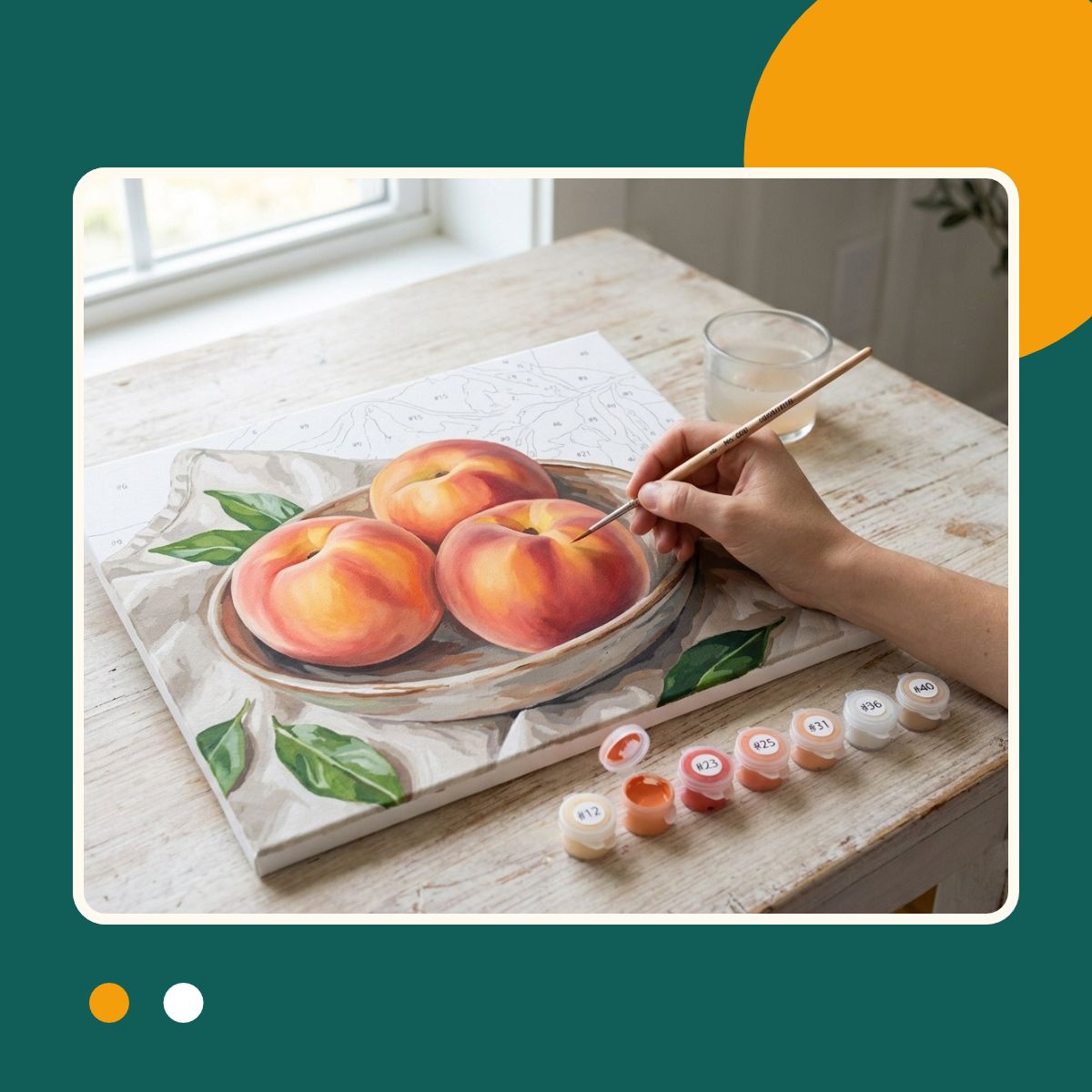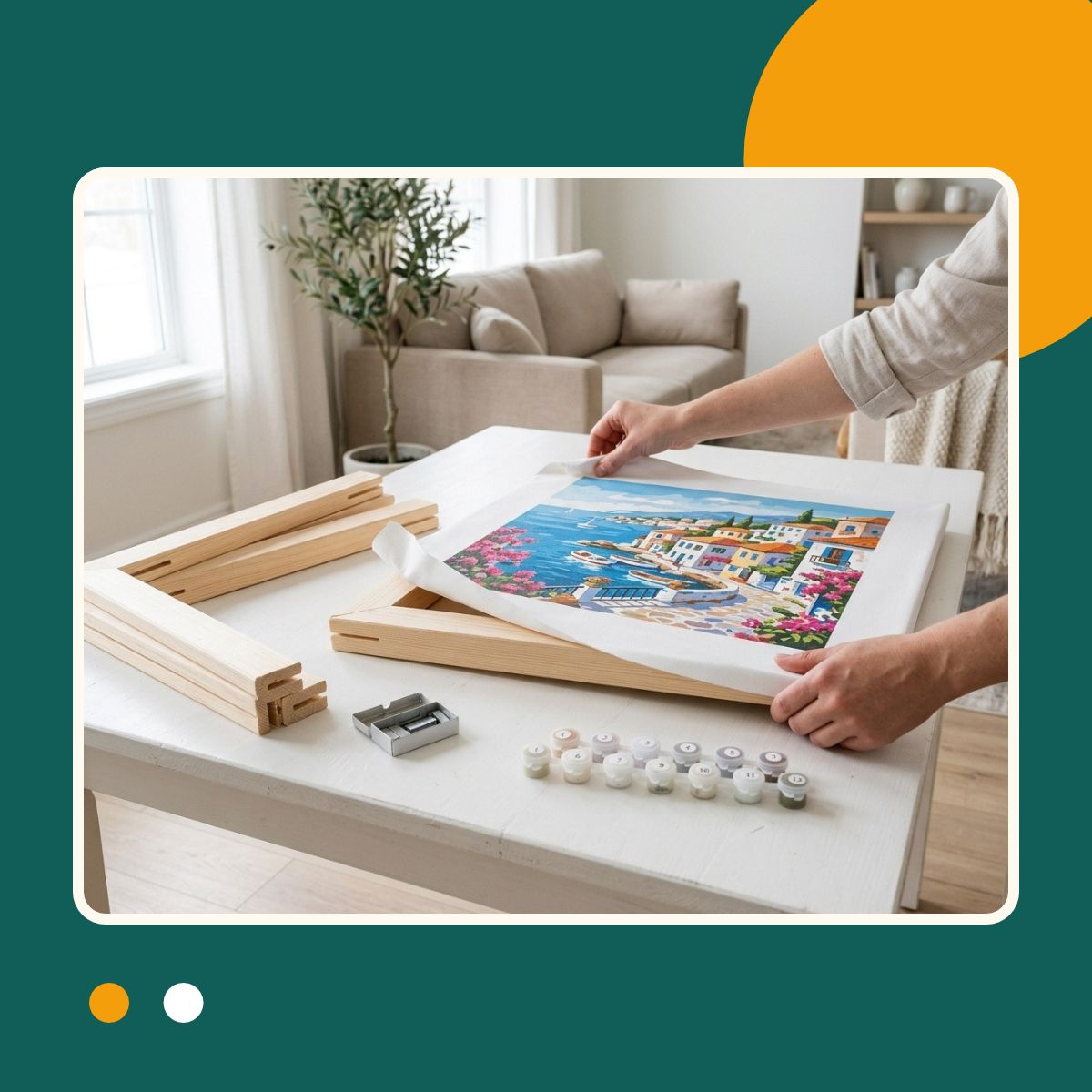

One of the most common issues in paint by numbers is that lines and numbers remain visible, especially in lighter areas. This happens even when you follow the instructions correctly. The goal is simple: improve paint coverage so the printed lines don’t show through the final result.
In this guide, you’ll learn how to cover lines in paint by numbers using practical methods that actually work. If you want to improve the overall look of your painting (not just cover lines), read our full guide on how to make paint by numbers look better.
Preparing for Coverage
A few things before you start make the biggest difference to how well lines and numbers are covered:
- Have an acrylic white paint pen ready: This is the fastest fix for light areas (white, yellow, skin tones) where numbers show through even after 2 layers.
- Use a small detail brush (size 0–1): Lets you stay inside the lines and build coverage exactly where numbers are visible.
- Check paint consistency before starting: If a color looks watery on the palette, don’t dilute it further. Paint used straight from the pot, without extra water, covers lines best.
- Work under strong light from the side: Side lighting makes printed numbers and thin outlines more visible so you can fix them early.
These small adjustments directly affect coverage and reduce the need for multiple corrections later.
Are lines or numbers visible after the first layer?
Light colors like white, yellow, or skin tones are the hardest to cover. It’s very common that numbers are still visible even after two layers, which is exactly where a white paint pen helps the most.
If you still see numbers or lines after the first layer, this is completely normal. Most paints, especially light colors like white, yellow, or pastel tones, are not fully opaque in one coat.
The solution is simple: build coverage gradually. Apply a second thin layer once the first one is fully dry. In most cases, the second layer fixes most visibility issues. A third layer is only needed for very light shades.
Paint consistency matters. Over-diluted paint lets the lines show through, while paint that is too thick dries into ridges. Use the paint as it comes from the pot and build coverage with even, thin layers instead of trying to cover everything at once.
Avoid painting a white base coat over the whole canvas to hide the print. It covers the numbers you still need. If the paint doesn't grip the canvas well, a thin coat of clear gesso helps instead, as our guide to gesso for paint by numbers explains.
Use a white marker to cover numbers in paint by numbers
One of the most effective ways to hide numbers is using an acrylic white paint pen. This works especially well in light sections where even multiple paint layers don’t fully cover the print.
Acrylic white pens are designed for this exact purpose. They sit on top of the printed numbers and block them before you apply paint. Compared to regular layering, this saves time and gives a cleaner result.
Apply the pen lightly over the numbers and let it dry completely. Then paint over it as usual. The numbers will no longer show through, even with lighter colors.
If you don’t have a paint pen, a gel pen can work, but coverage is usually weaker. For consistent results, a proper acrylic white pen is the better option.
How Many Layers Do You Actually Need?
Applying extra layers is still one of the most reliable ways to improve coverage. Thin, even layers work better than one thick coat.
Always let each layer dry before adding another. If you rush this step, the paint can lift or become uneven. Two layers are enough for most colors, while lighter shades may need three.
Focus on areas where numbers are still visible instead of repainting the entire section. This keeps the surface smooth and avoids unnecessary texture.
If you plan to blend two pale colors, cover their printed border first and let it dry. Blending won't hide a line that still shows through. Our guide on how to blend paint by numbers explains the order.
Achieving a Clean Finish
To get a clean result where lines are no longer visible, focus on consistency and detail:
- Cover problem areas first: Light sections usually need extra attention
- Use the right tools: A small brush or acrylic white pen makes a big difference
- Work in good lighting: You’ll catch visible numbers early
- Layer gradually: Avoid trying to fix everything in one pass
If your goal is to improve the overall look of your painting beyond just covering lines, such as choosing better designs or starting from your own photo, you can explore a custom paint by numbers kit.
For other common problems, such as a wrong color, white gaps along the lines or paint running out, see our guide to paint by numbers mistakes and how to fix them.