
A paint by numbers kit gives beginners a clear way to complete a Christmas painting without drawing the scene or mixing every color from scratch. The most suitable ideas use recognizable shapes, strong color contrasts, and enough open areas to make the project manageable.
The 25 Christmas painting ideas below include 15 existing Painting by Numbers Shop designs and 10 additional subjects that work well as painting themes. Each idea explains what makes the composition easier or more demanding, so you can choose a project that matches your experience and available time.

What Are the Easiest Christmas Pictures to Paint?
For a first Christmas painting, choose one large central subject rather than a crowded village or forest. A snowman, candle, gingerbread figure, ornament, or mug usually contains broader sections and fewer tiny edges. Snow also simplifies a composition because large white and pale-blue areas can separate the main subject from the background.
Dark night scenes and detailed Christmas trees take longer. They often include thin branches, lights, ornaments, windows, or falling snow. These designs are still possible for beginners, but they require a fine-point brush and more frequent breaks.
- Easiest subjects: snowman, gingerbread figure, candle, ornament, or simple wreath.
- Moderate subjects: truck, gnome, reindeer, fireplace, or gifts under a tree.
- More detailed subjects: Christmas village, market, decorated tree, church, or sleigh in a night sky.
25 Easy Christmas Painting Ideas for Beginners
1. Red Truck in the Snow
A red vintage truck creates a clear focal point against white snow, dark trees, and a brown barn. The truck itself uses solid red panels, but the fence, tree branches, wreath, and snow-covered buildings add moderate detail. Paint the pale sky and snow first, followed by the barn and trees, and leave the truck until the background is dry.

2. Christmas Gnome with the Tree
This composition places a red-hatted gnome beside a decorated tree and a small lantern. The large hat, beard, and coat are easy to identify, while the ornaments, lights, snowflakes, and thin branches require more control. Complete the snowy background before painting the gnome, then finish with the small tree decorations.

3. Merry Snowman
Merry Snowman is one of the simplest options in this list. Its body, red hat, green scarf, and orange sunset are divided into broad shapes with strong boundaries. The face and snowflake pattern are the only small areas. Paint the sunset first, then the white body, clothing, buttons, and facial details.

4. Stylized Winter Forest
Easy Painting Winter Time uses a red cabin surrounded by tall trees in black, gold, blue, and white. The snowy ground is open, but the patterned trees contain many slender lines and small decorations. It is better for a patient beginner than for someone seeking a very quick painting. Work from the pale background toward the darker foreground trees.

5. Vintage Christmas Tree
A decorated tree with presents underneath is a classic subject, but this particular design is more detailed than it first appears. The branches, ornaments, ribbons, candles, toys, and wrapped boxes create numerous small sections. Paint the wall and floor first, build the green tree from larger areas to smaller branches, and add ornaments after the green paint has dried.

6. Festive Candle and Poinsettia
A single candle surrounded by red poinsettias creates a compact still life with a dark background. The flame and candle are broad and straightforward, while the flower petals, pine needles, berries, and ribbon add medium detail. Begin with the black background, then paint the red flowers and greenery before finishing the candle and flame.

7. Gingerbread Snow Globe
The Merry Gingerbread design features one smiling gingerbread figure inside a snow globe, with small houses and trees behind it. Strong outlines make the main shapes easy to follow. The falling snow and evergreen branches need a finer point, so complete the large blue background and gingerbread body before adding those smaller elements.

8. Cozy Christmas Hearth
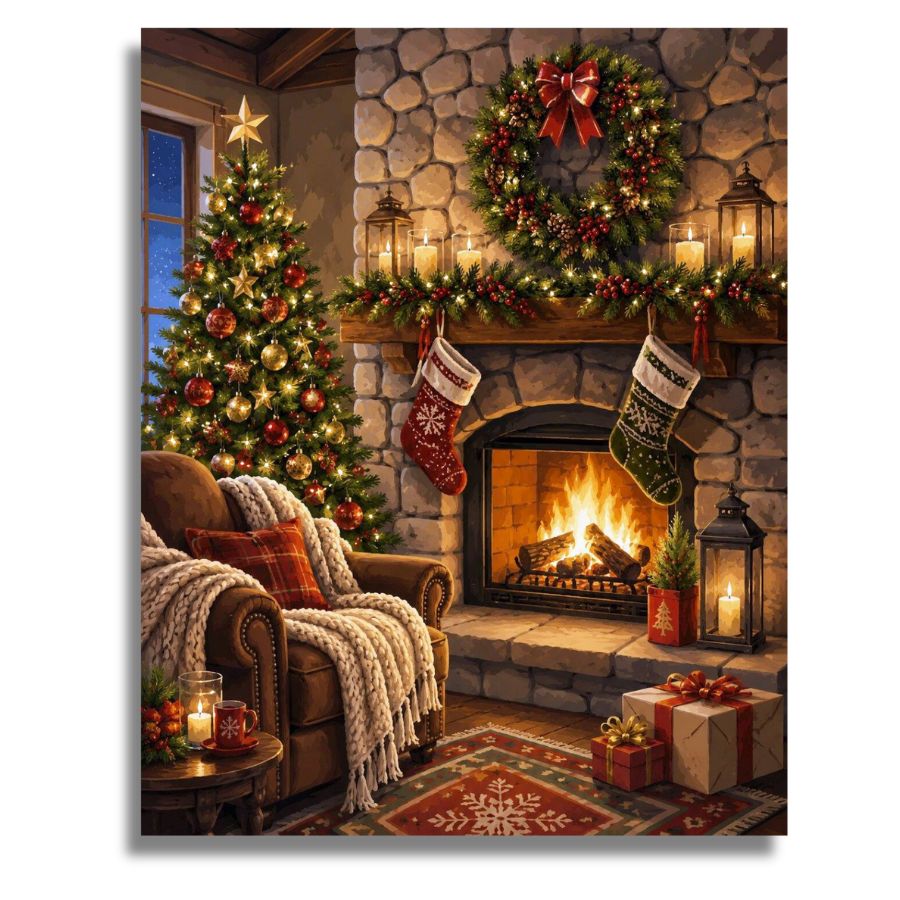
Cozy Christmas Hearth combines a glowing stone fireplace, decorated tree, armchair, stockings, wrapped gifts, candles, and snow outside the windows. It contains many small objects, so it is one of the more detailed products in this list. Paint the walls, windows, and fireplace first, then work forward through the furniture, tree, decorations, and warm areas of light.
9. Winter Cardinal Perch
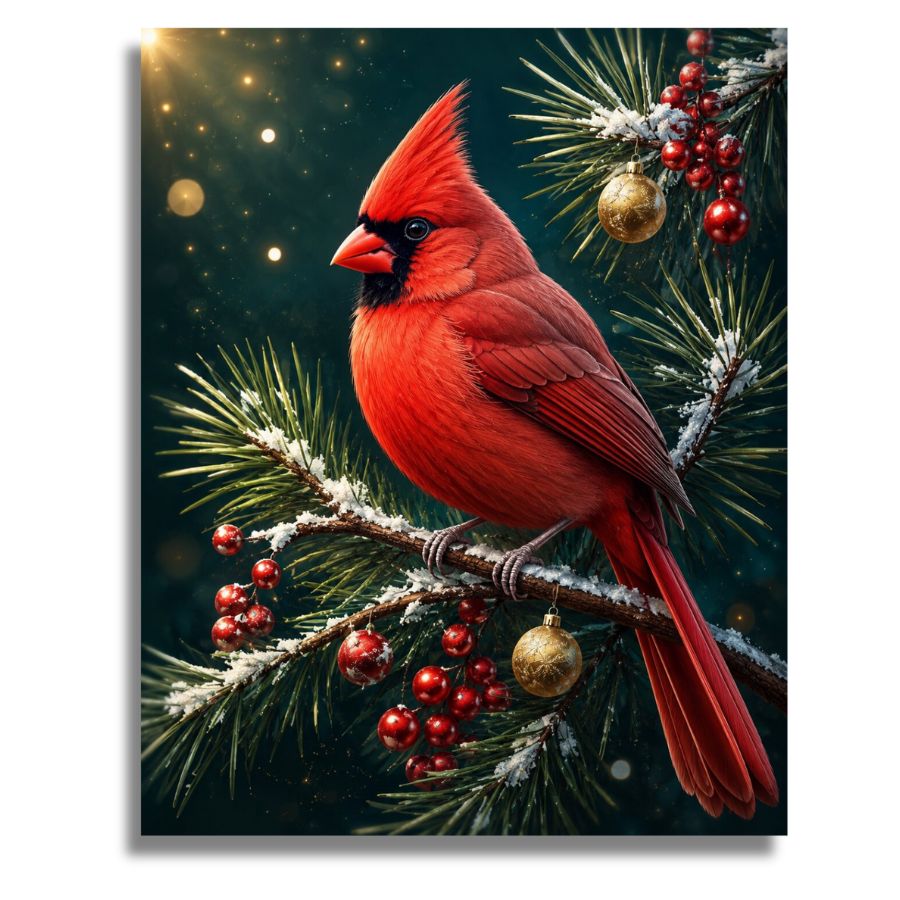
Winter Cardinal Perch features one bright red cardinal on a snowy pine branch with berries and gold ornaments. The bird creates a large, clearly defined focal point, while the pine needles and falling snow add moderate detail. Complete the dark background first, followed by the branch and bird, and leave the snow and small highlights until the surrounding colors are dry.
10. Christmas in the Town
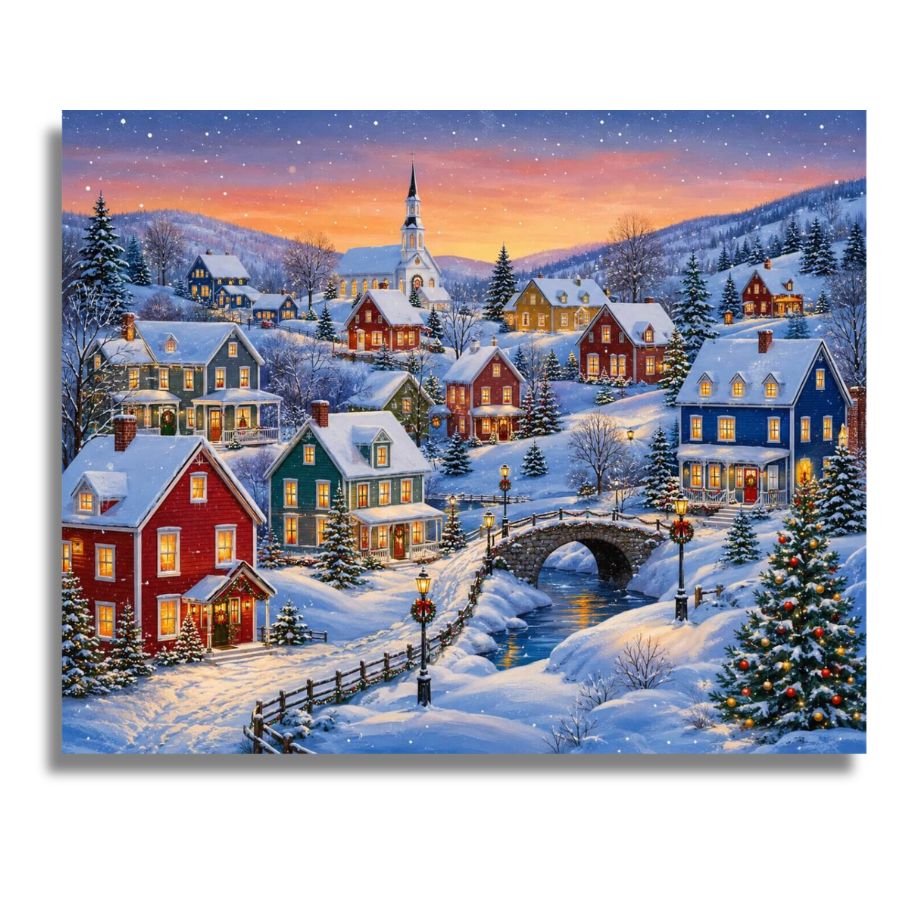
Christmas in the Town shows a snow-covered street lined with illuminated buildings, decorated trees, and people. Repeated windows, rooflines, lights, and figures make it a longer project than a single snowman or ornament. Work from the sky and distant buildings toward the foreground, then add the brightest windows and lights at the end.
11. Christmas Angel
Christmas Angel uses a centered portrait surrounded by red poinsettias, ornaments, bells, and golden decorations. The face and flowing hair require careful work, but the symmetrical arrangement makes the overall composition easy to follow. Paint the dark green background and outer decorations first before moving to the wings, hair, face, and small gold details.

12. Nativity of Jesus
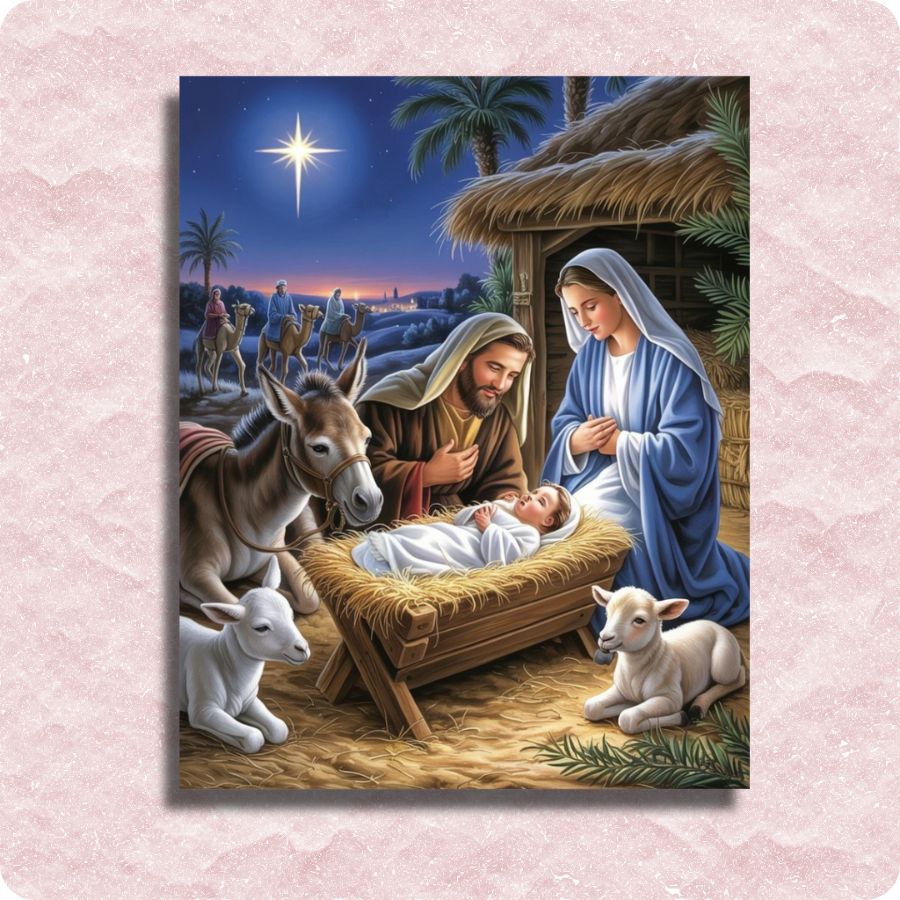
Nativity of Jesus places Mary, Joseph, and the infant Jesus beneath a simple shelter, with the Bethlehem star above them. Large areas of blue, brown, and pale yellow keep the main figures readable, while the straw, clothing folds, and rays of light provide finer detail. Begin with the night sky and shelter, then paint the figures and finish with the bright central light.
13. Red Scarf Reindeer
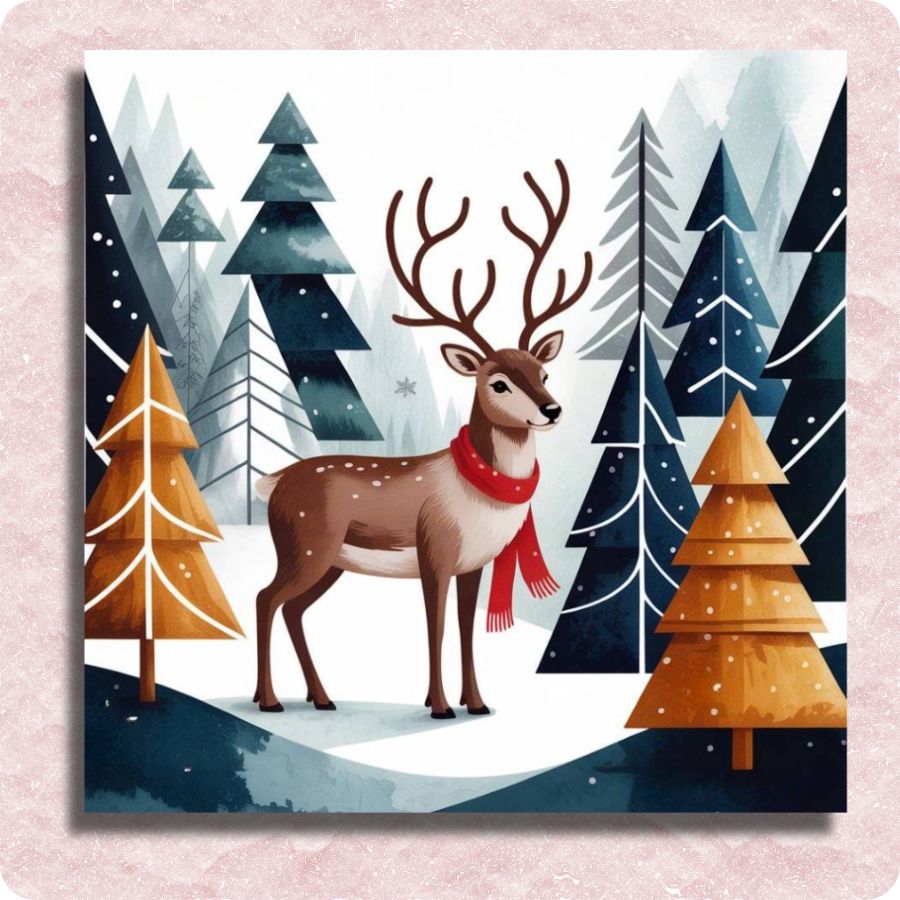
Red Scarf Reindeer is built around one animal portrait rather than a wide landscape. The scarf adds a strong red focal color, while the antlers, fur edges, and facial features provide the main detailed areas. Paint the background and larger brown sections first, then add the scarf, muzzle, eyes, antlers, and snow.
14. Red Mailbox in Winter
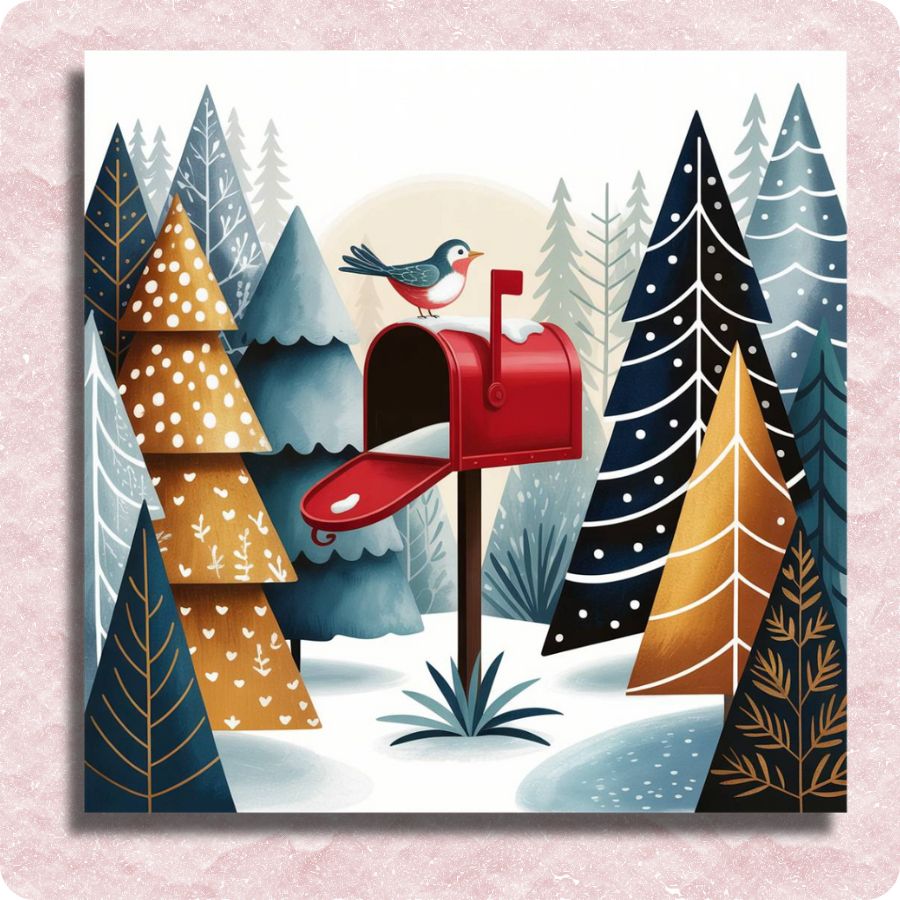
Red Mailbox in Winter uses a bright red mailbox, evergreen branches, berries, and snow against a soft blue background. The mailbox contains broad surfaces that are easy to paint, while the needles and snow-covered branches require a finer point. Complete the background and snow first, followed by the mailbox and smaller greenery.
15. Mini Cozy Christmas Paintings
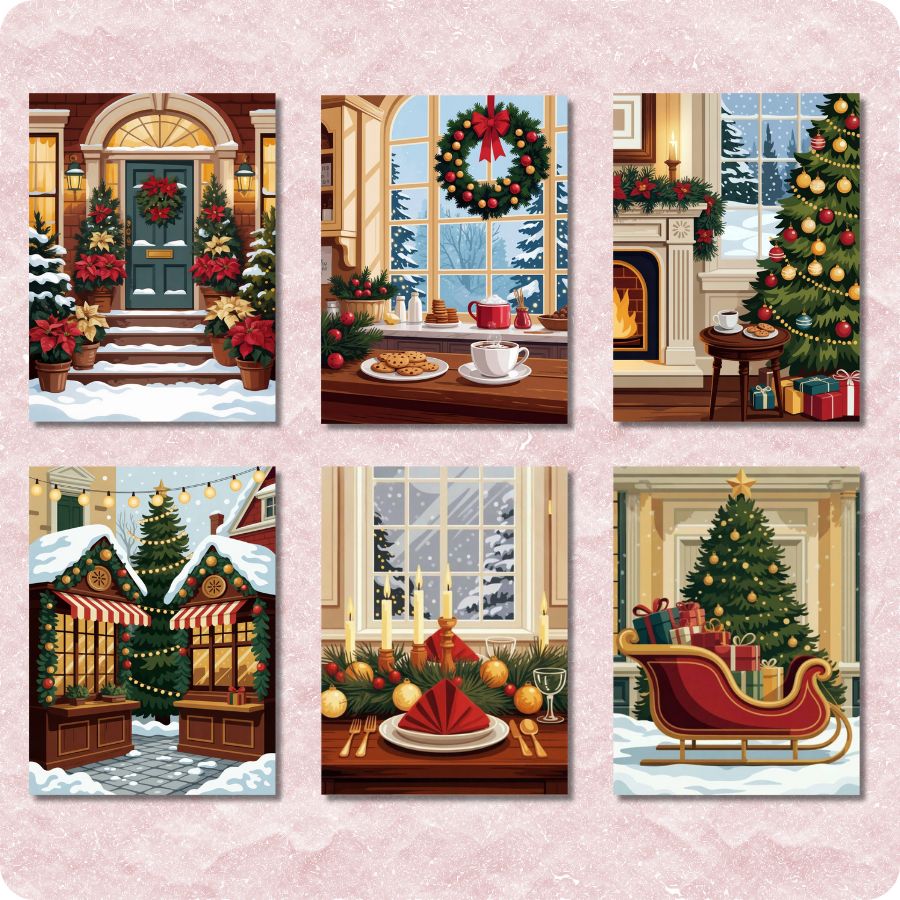
The Mini Cozy Christmas 6 Pack contains six small scenes: a snow globe, decorated tree, fireplace, gingerbread house, Santa mug, and Christmas candles. Each mini canvas is a separate short project, although the tiny decorations require controlled brushwork. Start with the design containing the largest shapes, then move to the more detailed tree or gingerbread house.
16. Santa’s Sleigh Against the Moon
Place Santa, the sleigh, and reindeer as a dark silhouette crossing a large pale moon. This composition is easier than a fully detailed Santa scene because the silhouette can be painted as one connected shape. A navy sky, a few clouds, and small stars provide enough contrast without crowding the canvas.
17. Cabin with a Lit Window
A small cabin surrounded by snow-covered pines is simpler than a busy town. The glowing window becomes the focal point, so most of the canvas can use cool blues, whites, and muted greens. Paint the sky and snow first, then the cabin, and reserve the warm yellow light for the end.
18. Gifts Under the Christmas Tree
Focus on the lower branches of a tree and a group of wrapped presents rather than painting the entire room. Large gift boxes create easy geometric sections, while ribbons and bows provide smaller details. Use three or four wrapping-paper colors so the boxes remain distinct without making the composition unnecessarily complicated.
19. Nutcracker Portrait
A front-facing nutcracker uses symmetry, straight uniform shapes, and strong reds, blues, blacks, and golds. These features make it suitable for beginners even when the uniform contains several decorations. Paint matching sections on both sides as you work and leave the face, moustache, and gold trim until later.
20. Polar Bear Under the Northern Lights
A white polar bear standing on blue snow can be combined with green and purple northern lights. The bear’s silhouette should stay simple, with only a few grey-blue shadows defining its legs, face, and body. Paint the sky in broad curved bands before adding the snow and bear.
21. Christmas Wreath on a Door
A centered wreath provides an easy circular composition. Use a plain red, blue, or wooden door as the background, then build the wreath from larger dark-green sections. Add lighter needles, pinecones, berries, and a red bow after the base colors are dry.
22. Single Christmas Ornament
One large ornament hanging from a pine branch is one of the easiest Christmas painting ideas. The ornament can use a simple red, gold, or blue gradient, while a small white highlight makes its surface appear reflective. Keep the branch limited to one corner so it does not compete with the main shape.
23. Candy Cane and Cocoa Mug
A mug of cocoa with marshmallows and one striped candy cane combines large rounded areas with a few recognizable details. Paint the tabletop and background first, then the mug, cocoa, and marshmallows. Complete the red-and-white candy-cane stripes after the surrounding colors have dried.
24. Christmas Train
A side-view locomotive carrying gifts works better for beginners than a train approaching in perspective. Large wheels, a rectangular carriage, and blocks of red, green, and black create a readable composition. Snow along the track can hide some of the smallest mechanical details.
25. Family Christmas Photo as a Painting
A family photo taken beside the tree can become a personal Christmas painting, but the source image needs clear faces and good lighting. Choose a photo with no more than two or three people and avoid dark, cluttered backgrounds. A custom paint by numbers kit can convert the photograph into numbered sections and matched acrylic colors.
How to Choose the Right Christmas Painting
Choose Merry Snowman, Red Mailbox in Winter, a single ornament, or the cocoa mug if you want broad areas and a short learning curve. Gingerbread Snow Globe, Festive Candle, Winter Cardinal Perch, and Red Scarf Reindeer add moderate detail without covering the entire canvas in tiny sections. Vintage Christmas Tree, Stylized Winter Forest, Christmas in the Town, Cozy Christmas Hearth, and Christmas Angel are better when you want a longer project.
Before choosing, look beyond the subject and examine the number of narrow lines, repeated decorations, and small background objects. A simple composition with one snowman can be easier than a tree with dozens of ornaments, even when both use a similar number of colors. More examples can be found among Christmas paint by numbers kits.
Tips for Painting Christmas Details
- Paint snow in thin layers: white and pale-blue sections may need a second coat to hide the printed numbers.
- Complete the background first: it is easier to keep snowflakes, lights, and branches clean when the area underneath is dry.
- Save thin lines for later: antlers, garlands, ribbons, and tree lights are easier to paint after the larger shapes.
- Keep only one or two paint pots open: acrylic paint can thicken while you work on detailed sections.
- Check the brush point: our guide to paint by numbers brushes explains why a slightly larger pointed brush can outperform a damaged tiny brush.
Final Choice
The best Christmas painting idea depends on how much detail you want. Start with one large snowman, ornament, candle, or gingerbread figure if this is your first project. Choose a village, decorated tree, forest, or market when you prefer a slower painting with many small sections. A clear subject and manageable level of detail matter more than the total number of colors.