Want to pick up painting but feel unsure where to start? Our guide offers easy painting ideas for beginners that will help you get comfortable with the basics. From abstract shapes to simple landscapes and florals, you’ll find plenty of projects that are fun and achievable.

Why Choose Acrylic Paints for Beginners
Acrylic paints are often recommended to beginners because they are easy to control and work well on different surfaces. You can use them on canvas, wood, paper, or even small decorative projects. Unlike oil paints, acrylics clean up with water and dry much faster, which makes the learning process less frustrating for first-time painters.
The fast drying time also helps when layering colors or correcting small mistakes. Painting feels less frustrating when you do not have to wait hours between layers before continuing a project.
Some beginners also enjoy acrylic pouring because it creates interesting patterns without requiring precise brushwork. It is a simple way to experiment with color combinations and movement on canvas.

Start With a Complete Paint by Numbers Kit
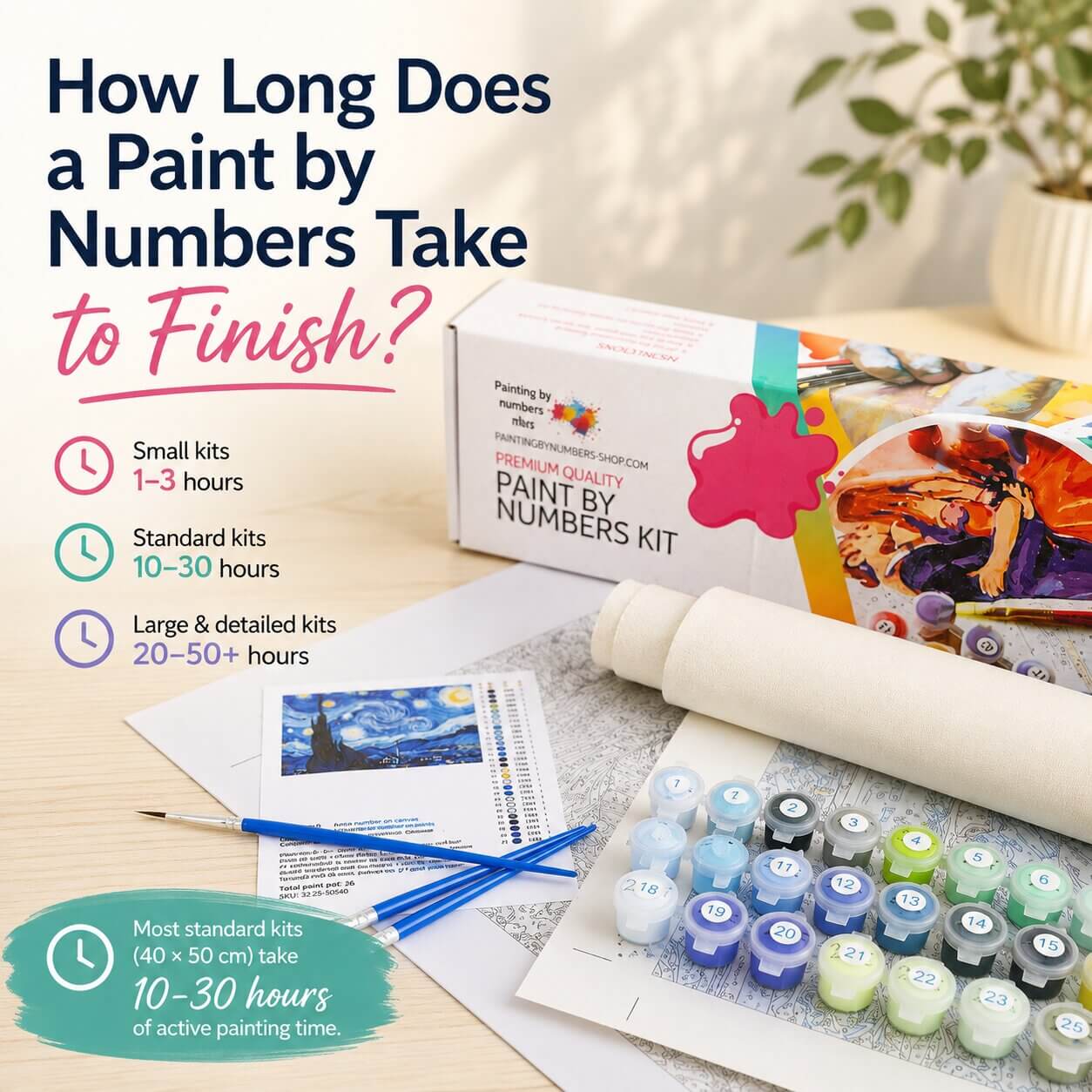
One of the easiest ways to begin painting is by using a paint by numbers kit because everything needed is already included in the box. You do not have to spend time choosing paint colors, brush types, or canvas sizes before starting your first project.
Our paint by numbers kits include a pre-numbered canvas, acrylic paints, and several brush sizes for both larger areas and smaller details. This makes the learning process simpler and removes a lot of beginner confusion around art supplies.
Smaller size kits are usually easier to complete because they contain fewer tiny sections and less visual detail. A complete kit also helps painters focus more on brush control and color placement instead of worrying about missing materials or incorrect paint choices.
Cheap brushes can still wear out quickly if too much pressure is used during painting, especially on detailed sections. However, starting with a complete kit is still one of the least stressful ways to get comfortable with acrylic painting for the first time.
Overcoming Fear of Starting
Mistakes are a normal part of learning, and acrylic paint can usually be painted over once dry. Try treating your first few paintings as practice instead of finished artwork instead of expecting perfect results immediately.
Simple Painting Ideas to Try First
| Painting Type | Difficulty | Best For |
|---|---|---|
| Abstract Art | Easy | Learning color blending |
| Flowers | Easy | Brush control practice |
| Butterflies | Easy | Symmetry and color contrast |
| Landscapes | Medium | Layering and blending |
| Monet Paintings | Medium | Impressionist techniques |
| Portraits | Hard | Facial details and precision |

Some painting subjects are easier for beginners than others. Abstract art, flowers, and butterflies are usually the easiest starting points because they rely less on precise proportions. Landscapes and impressionist paintings require slightly more blending and layering, while portraits and realistic animals are often harder because small mistakes are easier to notice.
Start with simpler painting ideas to build confidence before moving to more detailed artwork. Abstract shapes, landscapes, and floral designs are all good ways to practice color blending, layering, and brush control.
Abstract Shapes and Patterns
Abstract painting is one of the easiest ways to get comfortable with a brush because there are no strict rules to follow. You can test color blending, layering, and different brush movements without worrying about perfect shapes or proportions. Simple canvas wall art and abstract color patterns are easy ways to experiment with paint movement and blending.
Simple lines, circles, and textured backgrounds are usually easier starting points than portraits or cityscapes. These exercises also help painters understand how acrylic colors slightly change once they dry.
Easy Landscapes
Landscapes are a good way to practice blending, layering, and smooth color transitions. Sunsets, snowy scenes, and mountain lakes are usually easier than detailed buildings or crowded city scenes.
Landscapes are often less stressful than portraits because softer shapes hide small mistakes more naturally. Snowy scenes, sunsets, and forests are usually easier to paint than buildings or faces.
Floral Designs
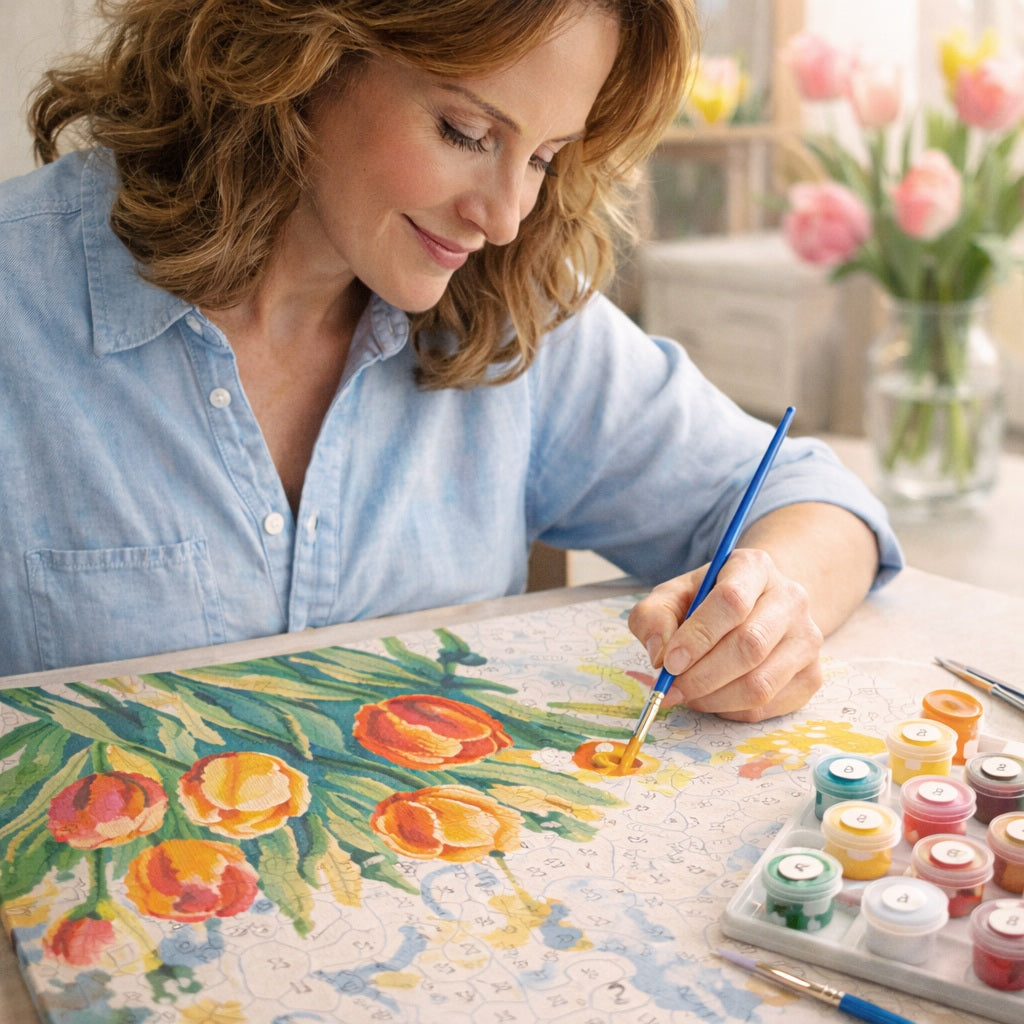
Floral paintings are a practical starting point for learning repeated shapes and softer brush movements. Lavender, tulips, and simple flower jars are often easier subjects than detailed roses or realistic bouquets.
Flowers are also forgiving subjects because uneven lines and small mistakes blend naturally into petals and leaves. Lavender and tulip designs are usually easier starting points than highly detailed roses. With practice, you’ll create floral paintings that brighten any space.
Easy Christmas Painting
Easy Christmas painting ideas are a simple starting point for beginners. Winter landscapes, snow-covered trees, Christmas gnomes, and holiday lights are usually easier subjects because they rely more on larger color areas than tiny realistic details. Paint by numbers kits also remove the stress of choosing colors and composition, making it easier to focus on color placement and smooth transitions.
Fun Painting Projects for Kids and Adults
Painting can also work well as a simple indoor activity for families during weekends or colder evenings. Fingerprint art, small acrylic crafts, and paint by numbers kits are usually easier to set up than larger traditional painting projects.
Exploring Different Surfaces
Acrylic paint also works on more than just canvas. Paper, wood, small stones, and simple craft projects are common surfaces for early acrylic painting practice. Wood and canvas usually hold acrylic paint better than glossy surfaces, which can feel slippery and harder to control for beginners.
Inspirational YouTube Channels
Video tutorials can help new painters understand paint consistency, layering, and brush movement more clearly than static photos. Channels like Angela Anderson, The Art Sherpa, and Painting With Jane all offer slower step-by-step projects that are easier to follow during early painting practice.
Easy Paint by Numbers Ideas for Beginners
Paint by numbers projects are often easier to start with because the composition, colors, and numbered sections are already prepared. This allows painters to focus more on color placement, paint consistency, and getting comfortable with acrylic paint.
1. Colorful Lion
The Colorful Lion canvas is an easy paint by numbers project with bold abstract colors and simplified shapes. Large abstract color areas make it less demanding than highly detailed animal portraits. The design relies more on color blocking than tiny details, which makes it easier to complete without getting overwhelmed halfway through the canvas.

2. Frog with Glasses
Stylized animal paintings are often easier to paint than realistic wildlife scenes because they rely less on fur texture and tiny details. The Frog with Glasses design uses bold outlines and clear color separation, which makes numbered sections easier to follow during longer painting sessions. Projects like this also help painters practice smaller details without the pressure of realistic proportions.

3. Snow Mountains Lake
Landscapes are another common starting point for beginners. Mountain lakes, forests, sunsets, and snowy scenes are often easier to paint because the shapes are softer and less precise than portraits. Detailed city skylines and crowded street scenes usually take beginners much longer to finish. Here is one example – Snow Mountain Lake. This scene uses larger blended areas and softer transitions, which helps beginners practice layering and reflections without overwhelming detail.
4. Mini Blue Hydrangea
Repeated flower shapes also help painters get more comfortable controlling smaller details without dealing with complex compositions.

5. Vincent van Gogh – Starry Night
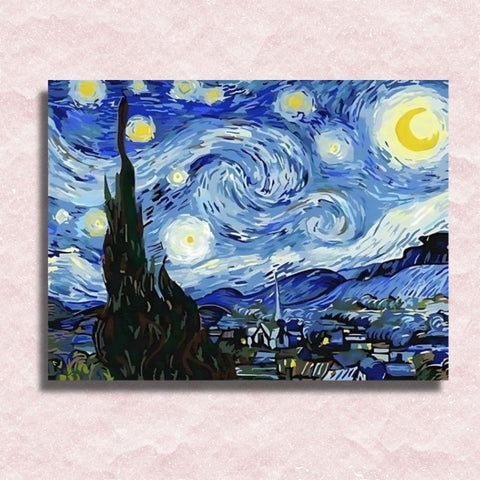
Starry Night is one of the most recognizable famous paintings for beginner painting practice. The swirling shapes and strong color contrasts make it easier to simplify than highly realistic artwork, and you can easily recreate this masterpiece. The swirling shapes and visible color blocks make it more approachable than highly realistic portraits or architecture paintings.
6. Paint a Butterfly
Butterflies work well for beginners because the shapes are symmetrical and easier to follow than portraits or realistic animals. Easy butterfly painting ideas are often recommended for early painting practice. Bright contrasting colors also make it easier to see numbered sections under indoor lighting.

7. Floral painting - use flowers to start your painting journey
Flowers are one of the most forgiving subjects for beginner painters. Repeated petals and soft natural shapes make floral paintings easier to follow than portraits or architecture. Simple flowers like tulips, daisies, and lavender usually contain repeated shapes that become easier after a few sections.

8. Claude Monet Paintings for Beginners
Impressionist paintings are often a good match for beginners because they rely more on visible color strokes and softer details than strict realism. Claude Monet paintings, especially water lilies, gardens, and bridge scenes, are popular beginner projects due to their layered colors and natural textures. Many Claude Monet paint by numbers kits use repeated brush patterns and blended backgrounds, which makes the painting process feel less rigid. Impressionist paintings also tend to feel more forgiving than highly realistic artwork.
Painting Time Expectations
-
Mini canvases: often 2–5 hours
-
Medium kits: usually several evenings
-
Large detailed canvases: can take multiple weeks
-
Portraits: often take longer than landscapes
-
Impressionist paintings: usually faster to complete than realistic scenes
Quick Beginner Tips
-
Start with smaller canvases before trying large detailed artwork.
-
Use natural daylight when possible to see numbered sections more clearly.
-
Avoid pressing too hard on thin brushes to prevent bristle damage.
-
Snowy landscapes, flowers, and impressionist paintings are usually easier than portraits.
-
Take short painting sessions at first instead of trying to finish everything in one evening.
-
Do not worry about tiny imperfections because they are rarely visible from normal viewing distance.
Common Mistakes Beginners Make
One of the most common beginner mistakes is starting with oversized or highly detailed canvases that take weeks to complete. Smaller 20x20 cm or 30x40 cm projects are usually easier starting sizes because they contain fewer tiny sections and feel less overwhelming.
People also tend to press too hard on small brushes, which can cause the bristles to split after repeated use. Another common issue is painting under dim warm lighting, making numbered sections harder to see, especially on darker canvases.
Trying to perfect every tiny section can also slow progress unnecessarily. From a normal viewing distance, small imperfections are usually much less visible than beginners expect.
Summary
Acrylic painting is one of the easiest ways to start learning art at home because the materials are affordable, beginner-friendly, and simple to use compared to many other painting mediums.
Painters usually improve much faster after completing a few smaller projects instead of jumping directly into large detailed canvases. Smaller kits can often be finished in one or two evenings, while larger detailed canvases may take several weeks to complete. Tutorials, paint by numbers kits, and practice exercises can all help build confidence during the first few weeks of painting.
Frequently Asked Questions
Are acrylic paints suitable for beginners?
Yes. Acrylic paints dry quickly, are easy to clean with water, and work well for beginner practice projects.
What supplies do I need to start acrylic painting?
A small acrylic paint set, a few synthetic brushes, and a canvas are enough to get started.
How can I overcome the fear of starting to paint?
Start with smaller projects instead of highly detailed canvases and expect a few mistakes during the first attempts. Confidence usually improves much faster after finishing several smaller paintings than after struggling through one oversized project.
What are some simple painting ideas for beginners?
Abstract art, flowers, butterflies, snowy landscapes, and impressionist paintings are usually easier subjects for first-time painters than portraits or detailed city scenes.
Where can I find tutorials and inspiration for acrylic painting?
YouTube channels like Angela Anderson, The Art Sherpa, and Painting With Jane offer slower step-by-step beginner tutorials that make brush movement, layering, and drying easier to understand.