The Best Famous Paintings to Try at Home for All Skill Levels
Recreating a famous painting is one of the easiest ways to start painting at home while learning practical skills like brush control, color layering, shading, and composition. Recognizable artworks usually feel less intimidating for beginners because the final image is already familiar. From our experience, people often progress faster when painting well-known artworks since they already understand what the finished result should look like.
Whether you’re a beginner or an experienced artist, paint by numbers kits of famous artworks make the process accessible and enjoyable. These kits usually include a pre-printed canvas, numbered paint pots, and brushes, making the process easier to follow even for first-time painters. Subjects range from Van Gogh’s “Starry Night” to Monet’s “Water Lilies,” with styles ranging from expressive landscapes to detailed Renaissance portraits.

Some famous paintings are also easier to recreate than others. Landscapes with expressive brushwork are often more forgiving for beginners, while portraits usually require smoother shading and more precision around the face and eyes.
These classic artworks also help beginners understand how artists use contrast, lighting, and composition to guide the viewer’s attention.
Below are ten famous paintings that work especially well for beginners and hobby painters.
1. Starry Night - Vincent van Gogh
Vincent van Gogh's Starry Night is one of the most popular famous paintings to recreate because the swirling sky naturally hides small imperfections and uneven brush strokes. This famous Dutch painting is known for its deep blue tones, bright stars, and expressive movement. From our experience, first-time painters often enjoy this artwork because it feels detailed without requiring perfectly realistic shading. The bold contrast between the dark village and luminous sky also makes the final result visually impressive even on smaller canvases. Whether you use a van Gogh paint by numbers kit or your own canvas, this masterpiece is a great starting point for learning color layering and movement.
Painting Tip: Slightly larger brushes often work better for the swirling sky because broader strokes help recreate Van Gogh’s flowing movement more naturally.

2. Water Lilies - Claude Monet
Claude Monet's "Water Lilies" series is a great choice for painters who prefer softer colors and less rigid detail. Unlike portrait paintings, Monet’s impressionist style focuses more on atmosphere and light than precise outlines. This style often feels less stressful for new painters because the blended reflections and layered colors still look natural without perfect accuracy. Capturing Monet's peaceful garden scenes also helps you practice color transitions and depth in a more relaxed way.
Painting Tip: Softer brushes and thinner paint layers usually help reflections blend more naturally in impressionist paintings.
If you're interested in learning more about this famous artist, check out our article on the most famous Monet paintings.

3. Wave off Kanagawa - Katsushika Hokusai
Hokusai, a pioneer of Japanese art, created the iconic The Great Wave off Kanagawa. This artwork is especially popular among beginners who want a famous painting without detailed faces or complex skin shading. The dramatic wave patterns and strong outlines make the painting easier to follow while still producing a canvas that looks detailed and dynamic once completed. The contrast between the deep blue water and the distant Mount Fuji also helps painters practice layering and movement in a simple but effective way.
Painting Tip: Many beginners find it easier to paint the sky and background first before outlining the large wave details.

4. Girl with a Pearl Earring - Johannes Vermeer
Girl with a Pearl Earring is one of the most recognizable portraits in art history and is often called the "Mona Lisa of the North." Unlike expressive paintings with visible brush strokes, this artwork relies on soft shading, smooth skin tones, and subtle lighting transitions. From our experience, portrait beginners often find artworks like this harder than landscapes because even small differences around the eyes or mouth become noticeable. Using a larger canvas usually makes the blending process easier and helps preserve the delicate details of Vermeer’s style. The limited color palette and dark background also help painters focus more on light, contrast, and facial expression without feeling overwhelmed by too many colors.
Painting Tip: Thin paint layers usually create smoother skin shading than applying thick coats all at once.

5. Self Portrait - Frida Kahlo
"Self Portrait" by Frida Kahlo stands out because of its bold colors, floral elements, and symbolic details. Unlike softer impressionist paintings, Kahlo’s style uses stronger outlines and more defined shapes, which usually feels easier to follow on canvas than paintings with subtle blending and softer transitions. Many painters also enjoy this artwork because the vibrant plants, animals, and decorative elements create constant variation across the canvas instead of repeating the same shapes and colors for long sections. This artwork is a good choice for people who enjoy portraits but want something more colorful and expressive than traditional Renaissance paintings.
Painting Tip: Strong outlines usually look better when painted first, since they help separate the bright colors and decorative details more clearly.

6. The Last Supper - Leonardo da Vinci
The Last Supper is one of the most recognizable Renaissance paintings ever created. Because of its wide composition and multiple figures, it is usually better suited for intermediate painters rather than complete beginners. From our experience, larger canvas sizes work best for this artwork since smaller versions can make the facial details harder to paint clearly. It also helps painters understand how large multi-character scenes stay visually organized through spacing, direction, and focal points.

7. Summer - Alphonse Mucha
"Summer" by Alphonse Mucha is a beautiful celebration of the season's warmth and elegance. This Art Nouveau artwork is a good choice for painters who enjoy decorative details, flowing shapes, and warmer color palettes. Decorative Art Nouveau paintings often require more patience around curved outlines and repeating ornamental details than simpler landscape scenes. Its flowing lines and organic composition make it especially appealing for people who prefer elegant decorative art over realistic portraits or scenery.
Painting Tip: Painting the larger hair and fabric sections first usually makes smaller decorative details easier to place later.

8. Mona Lisa - Leonardo da Vinci
The Mona Lisa by Leonardo da Vinci is arguably the most famous portrait in the world. While many beginners are excited to recreate it, portraits like Mona Lisa are usually more challenging because smooth skin shading requires patience and careful blending. From our experience, painters who already completed one or two easier landscapes often enjoy this project more. The subtle lighting and facial expression make this artwork rewarding once finished, especially on larger canvases where the details stand out more clearly.
Painting Tip: Let lighter skin tones dry first before adding darker shadows around the eyes and mouth to avoid muddy blending.

9. The Birth of Venus - Sandro Botticelli
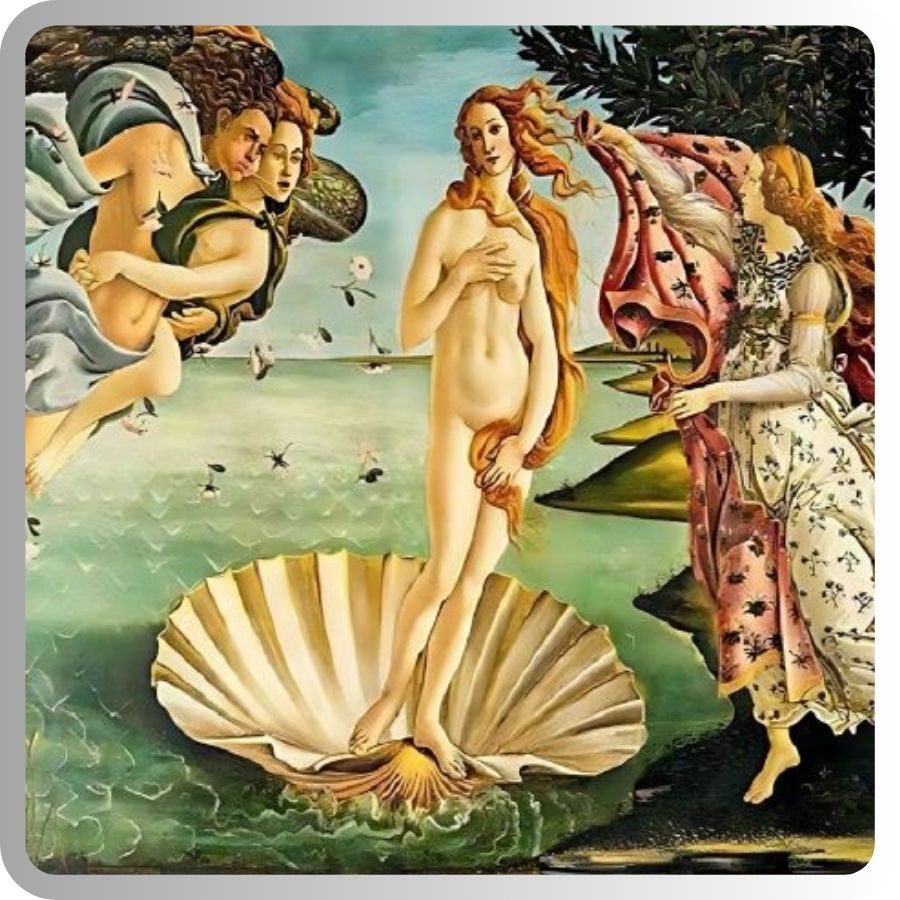
The Birth of Venus combines flowing hair, soft colors, and classical Renaissance composition into one elegant painting. Although it contains more detail than simpler landscapes, the decorative elements and flowing composition help keep the painting process engaging from start to finish. This painting works especially well for people who want a more advanced project without relying heavily on dark shadows or dramatic contrast often seen in other Renaissance artworks.

10. The Scream - Edvard Munch
The Scream is one of the easiest famous expressionist paintings to recreate because the dramatic lines and bold colors are intentionally exaggerated rather than realistic. Small imperfections blend naturally into the emotional style of the painting, which makes this artwork especially approachable for beginners. The vivid sky and swirling background also make it a fun project for experimenting with contrast and movement.
Painting Tip: Expressionist paintings usually look better when colors stay bold and slightly imperfect rather than overblended.

Famous Painting Difficulty Guide
| Painting | Difficulty | Best For |
|---|---|---|
| Starry Night | Beginner | Movement and color layering |
| Water Lilies | Beginner | Relaxed impressionist painting |
| The Great Wave off Kanagawa | Beginner | Strong outlines and ocean scenes |
| Girl with a Pearl Earring | Intermediate | Portrait practice and shading |
| Self Portrait - Frida Kahlo | Intermediate | Bold colors and defined shapes |
| The Last Supper | Advanced | Perspective and multi-character scenes |
| Summer - Alphonse Mucha | Intermediate | Decorative Art Nouveau style |
| Mona Lisa | Advanced | Realistic portraits and skin blending |
| The Birth of Venus | Intermediate to Advanced | Renaissance details and flowing forms |
| The Scream | Beginner | Expressionist colors and movement |

Best Famous Paintings for Absolute Beginners
-
Starry Night works well for beginners because the swirling sky patterns naturally hide uneven brush strokes.
-
The Great Wave off Kanagawa is easier to follow thanks to its bold outlines and limited color palette.
-
The Scream is forgiving because the exaggerated expressionist style does not require realistic shading.
-
Water Lilies is ideal for relaxed painting sessions because blended reflections and softer edges feel less rigid.
FAQ About Recreating Famous Paintings
What is the easiest famous painting to recreate?
From our experience, Starry Night and The Scream are among the easiest famous paintings for beginners because the expressive lines and movement make small imperfections less visible.
Are famous paintings good for beginners?
Yes. Famous paintings already give beginners a clear reference for colors, composition, and shading, which usually makes the painting process feel less overwhelming than starting from a completely blank canvas.
Which famous paintings are hardest to recreate?
Portraits like Mona Lisa and Girl with a Pearl Earring are usually harder because facial shading, skin tones, and small details require smoother blending and more precision.
Should beginners use larger canvases?
Larger canvases are often easier for detailed paintings because small facial features and tiny sections become easier to paint accurately.
Paint like famous artists
Recreating famous paintings at home is one of the best ways to become more comfortable with color, composition, and brush control without starting from a blank canvas. Because these artworks already provide a clear visual reference, beginners often feel less pressure than when trying to plan an original composition from scratch.
As you experiment with these famous artworks, you will likely notice that certain painting styles feel more natural and comfortable than others. Some people enjoy expressive landscapes with visible movement, while others prefer portraits, decorative Art Nouveau details, or softer impressionist scenes. If you want to recreate an artwork that feels more personal, you can also turn your own image into a custom paint by numbers kit.
After finishing a few famous paintings, many people naturally become more comfortable mixing colors, adjusting small details, and experimenting beyond clearly defined sections. Over time, this process often helps beginners move from structured kits toward more independent painting projects.