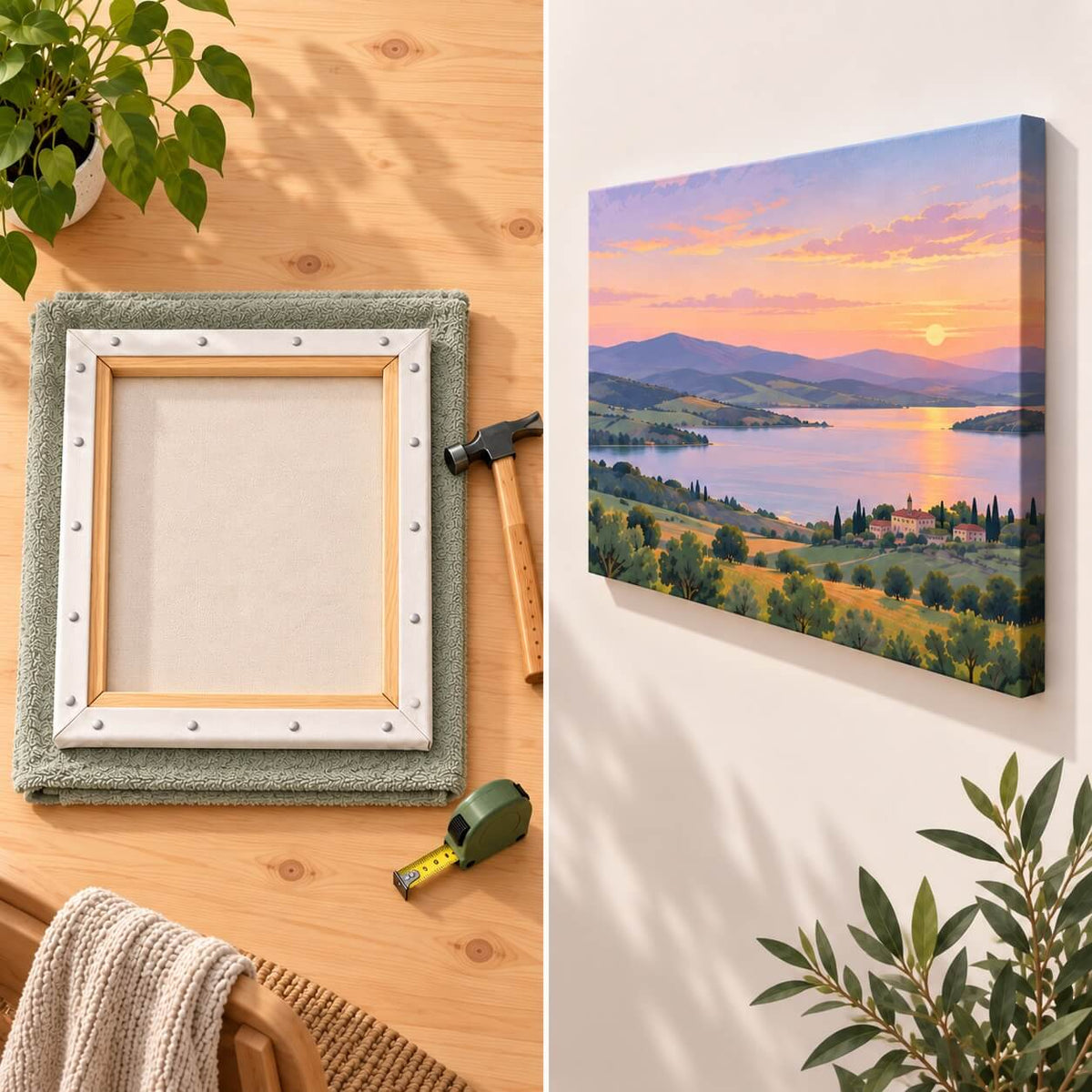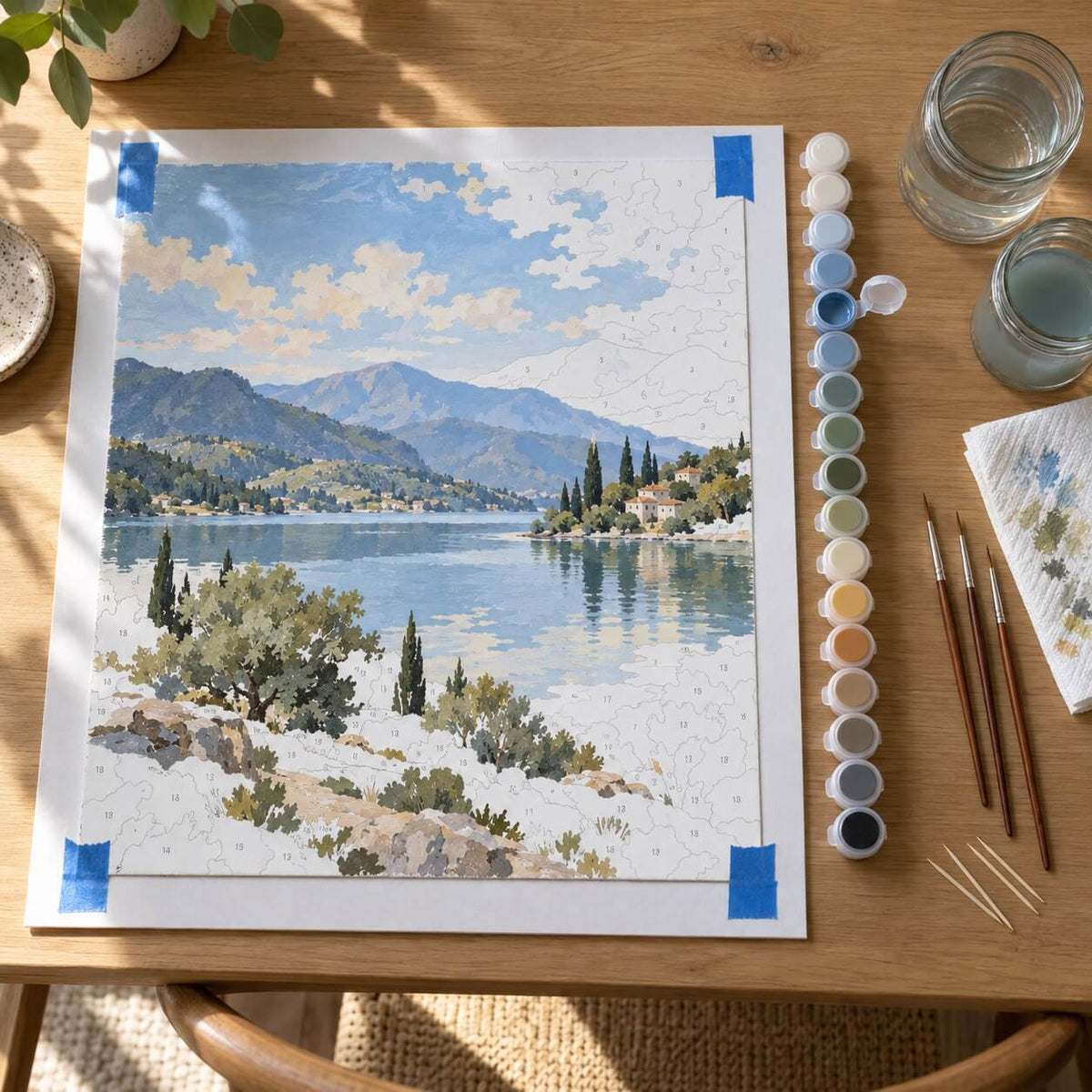

Applying clear gesso before starting a paint by numbers project can improve how acrylic paint grips the canvas. It is not required, but a thin coat may reduce small white gaps in the canvas texture and make the paint easier to control.
The canvases included in our paint by numbers kits are printed with the design but are not coated with gesso. You can paint directly on them, or you can prepare the surface first when you prefer a little more texture and grip.
Clear gesso is the best option because it keeps the printed numbers and outlines visible. White gesso creates an opaque layer and may cover the design before you begin painting.
What Does Gesso Do?
Gesso is a primer used to prepare canvas, wood, and other surfaces for painting. Once dry, it creates a slightly absorbent texture often described as tooth. This texture helps acrylic paint stay on the surface instead of sliding across it.
Gesso does not necessarily make a canvas smoother. Clear gesso often creates a slightly rough or gritty finish. This can help the paint grip the canvas, but a thick layer may make small numbered sections harder to fill.
For paint by numbers, the goal is to add only a light texture. You do not need the heavy layer that an artist might use when preparing a blank canvas for an original painting.
Do You Need Gesso for Paint by Numbers?
Gesso is optional. Many people paint directly on the printed canvas and achieve good coverage without preparing the surface first.
It may be useful when the paint moves across the canvas too easily, forms uneven streaks, or leaves small white dots between the woven fibers. Some painters also prefer the extra control that a lightly textured surface provides.
Consider using clear gesso when:
- acrylic paint does not stay in place;
- the canvas texture remains visible through the color;
- the paint leaves many small unpainted dots;
- you prefer a surface with more grip.
You can skip it when you are satisfied with how the paint applies directly to the canvas. Designs with many tiny sections also require extra care because a rough gesso layer may make fine details more difficult to paint.
The simplest approach is to test a small corner first. Let the gesso dry, paint over part of the test area, and compare it with the untreated canvas.
Clear Gesso vs White Gesso
Clear and white gesso serve a similar purpose, but they produce very different results on a printed canvas.
Clear Gesso
Clear gesso allows the numbers, outlines, and printed shading to remain visible. A single thin coat can add grip without covering the guide underneath.
However, clear gesso does not always dry completely invisible. Some products leave a slightly matte or frosted finish, especially when applied too heavily. Several coats may also make small numbers less clear.
Testing the product before covering the entire canvas helps you find the right amount.
White Gesso
White gesso creates an opaque white background. Artists commonly use it on blank canvases or when they want to cover an existing surface before repainting it.
It is usually unsuitable for paint by numbers because it can hide the numbers, section lines, and printed reference image. Even a thin coat may reduce the contrast of detailed areas.
Use white gesso only when you plan to redraw the image or paint over the original design without following the numbers.
How to Apply Clear Gesso to a Paint by Number Canvas
You will need clear acrylic gesso, a wide soft brush or foam brush, a small clean container, and a dry lint-free cloth. Very fine sandpaper can also help when the dry surface feels rougher than expected.
A wide brush spreads the product more evenly than a small detail brush. Keep the smaller brushes for painting the numbered sections. Our guide to paint brushes for paint by numbers explains which brush shapes work best for larger spaces, narrow lines, and fine details.
Follow these steps:
- Flatten the canvas. Place it on a clean, level surface and remove major folds or wrinkles. Gesso can collect around creases and dry in thicker patches.
- Remove dust and loose fibers. Wipe the canvas gently with a dry lint-free cloth. Do not wash or soak the printed surface.
- Test a small corner. Apply a little clear gesso to an outer edge. Let it dry and check whether the printed numbers remain easy to read.
- Stir the gesso slowly. Some products separate during storage. Avoid shaking the container because this can create air bubbles.
- Apply one thin coat. Use long, even strokes and remove excess product from the brush before it touches the canvas. Every number and outline should remain visible.
- Let the canvas dry flat. Follow the drying time stated on the product label. Do not begin painting while the surface still feels soft, cool, or tacky.
- Check the texture. A little roughness is normal. If the surface feels too gritty, lightly sand only the raised areas with very fine sandpaper and remove all dust afterward.
Avoid repeatedly brushing over areas that have started to dry. This can create ridges, cloudy patches, and uneven texture.
One coat is enough in most cases. A second coat should only be considered when the first layer does not add enough grip and the printed design remains clearly visible.
Can You Dilute Gesso With Water?
Some acrylic gesso products can be thinned with water, but the correct amount depends on the brand. Many clear gesso products are already ready to use.
Check the instructions on the container before adding water. When dilution is allowed, add only a small amount at a time and mix it thoroughly.
Too much water may weaken the dried layer or cause the gesso to spread unevenly. For a paint by numbers canvas, using less product is usually safer than heavily thinning a large amount.
Common Mistakes to Avoid
Applying too much gesso is the most common problem. A thick layer can hide faint numbers, fill narrow sections, and leave visible brush marks. The coat should be thin enough that the printed canvas looks almost unchanged.
Several coats are rarely necessary. Each additional layer increases the texture and may reduce the visibility of detailed sections.
Do not begin painting before the gesso has dried completely. Wet primer may mix with the acrylic paint and produce uneven color or coverage.
Sanding also requires a light touch. Heavy pressure can damage the printed design. Sand only when the dried surface feels noticeably rough.
Gesso can improve the painting surface, but it cannot solve every coverage issue. Paint consistency, brush condition, and application technique also affect the result. Our paint by numbers tips explain how to improve coverage, paint small sections, and keep the finished image clean.
Frequently Asked Questions
How many coats of clear gesso should I use?
One thin coat is enough for most paint by numbers projects. Add another only when the first coat does not provide enough grip and the numbers remain clearly visible.
Can I apply gesso after I start painting?
Gesso should be applied before painting. Adding it over completed sections may change their color, texture, and finish.
Is gesso the same as a sealer?
No. Gesso prepares the canvas before you begin painting. A sealer or varnish protects the finished artwork after the acrylic paint has dried.
Once your project is complete, read our guide on how to seal a paint by numbers painting.
Final Thoughts
Clear gesso is an optional way to prepare a paint by numbers canvas. It can add grip, reduce visible gaps in the woven texture, and make acrylic paint easier to control.
Test the product first and apply only one thin coat. The best result adds enough texture to help the paint without making the printed numbers harder to see.