Paint by numbers gives a busy mind one clear task: match a color to a number and fill the marked space. The image, colors, and basic process are already planned, so you can start painting without deciding what to create. This structure can make it a calming hobby during stressful or tiring days.
Painting at home is not the same as clinical art therapy. However, that does not mean the experience has no therapeutic value. Paint by numbers can provide focused creative time, visible progress, and a temporary break from everyday demands.
This guide explains the difference, looks at what research can support, and shows how to create a painting routine that feels calming rather than demanding.

Is Paint by Numbers Really Art Therapy?
Art therapy is a mental health profession. A qualified art therapist combines creative activities with psychological knowledge and works toward specific goals with a client.
Using a paint by numbers kit at home does not include this professional guidance. It is therefore more accurate to describe it as a creative hobby that can feel therapeutic.
A therapist could choose to use paint by numbers during a guided session. In that situation, the kit would be one tool within a wider therapeutic process. The same kit used independently at home remains a leisure activity.
This distinction matters because it allows us to discuss the real value of painting without making unsupported promises. A hobby does not need to treat a medical condition to be useful.
Why Paint by Numbers Can Feel Therapeutic
Open-ended art requires many decisions. You need to choose a subject, plan the composition, select colors, and work out where to begin. Paint by numbers removes much of that uncertainty. You can simply find a number, open the matching paint, and complete one section.
This clear sequence gives your attention a specific target. For a while, your eyes and hands focus on color, shape, and placement instead of unfinished tasks or repetitive thoughts. The activity does not make those concerns disappear, but it can create some distance from them.
Progress is also easy to see. Even a short session leaves behind several completed areas. On a day when a large project feels overwhelming, finishing one color or one corner can still provide a sense of movement.
The repeated actions may also develop a comfortable rhythm. You load the brush, fill a space, rinse the tip, and move to the next section. Some painters find this pattern calming. Others enjoy watching a picture slowly become recognizable.
However, the experience is not the same for everyone. Tiny sections, unclear numbers, and very similar colors can cause frustration. A design that relaxes one person may test another person’s patience. The difficulty of the kit plays a major role in whether the session feels calming.
Our guide to the benefits of paint by numbers covers the wider creative, practical, and social value of the hobby.
What Research About Art-Making Shows
Research specifically focused on paint by numbers is limited. Most relevant studies examine general art-making or professional art therapy, so their results should not be treated as direct proof about numbered painting kits.
A small 2016 study examined 39 healthy adults before and after 45 minutes of creative activity. Most participants had lower cortisol levels after making art. They used materials such as markers, clay, and collage supplies rather than paint by numbers, so the study only suggests that creative activity may help some people feel less stressed.
Research into professional art therapy has also produced promising but limited results. A systematic review of art therapy for anxiety found too few strong studies to support firm conclusions. Clinical art therapy also differs from painting independently at home.
The evidence therefore supports a careful conclusion: creative activities may help some people settle, focus, or take a mental break. It does not prove that paint by numbers treats anxiety, ADHD, depression, or another condition.
Claims about correcting brain chemistry, creating new neurons, preventing dementia, or producing the same mental state as meditation go beyond the available research. Paint by numbers has enough practical value without attaching dramatic medical promises to it.

Creating a Calming Painting Routine
There is no ideal session length that works for everyone. Start with 10 or 20 minutes and continue if painting still feels comfortable. A short session can be enough to shift your attention and make visible progress.
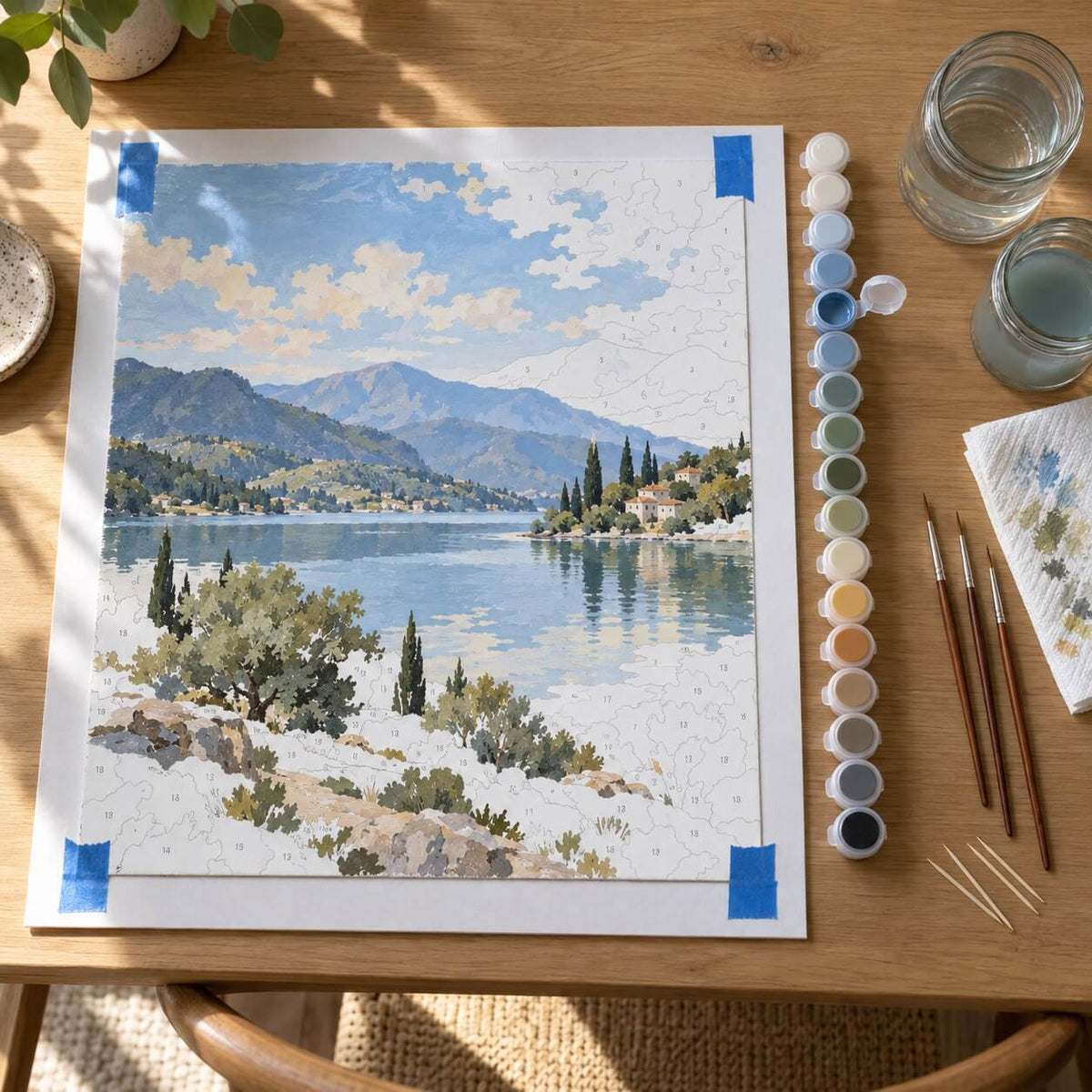
Prepare the basic supplies before you begin. Good lighting makes small numbers easier to read. Keep clean water, a cloth, and the required paint pots within reach. A stable table also prevents the canvas and water cup from moving while you work.
Choose one manageable goal for the session. You might complete several larger spaces, work on one corner, or paint one color within a small area. You do not need to finish the whole color across the canvas.
Close every paint pot firmly when you stop. The canvas can wait until another day, so there is no need to turn a relaxing evening into a midnight shift.
Pay attention to your physical response. If you are comfortable and interested in the next section, continue. If you start squinting, gripping the brush tightly, or making repeated mistakes, take a break or move to a simpler area.
Some painters enjoy following the numbers in order. Others prefer to begin with the background, larger sections, or colors they like most. There is no correct sequence as long as the method works for you.
Choosing a Kit That Feels Comfortable to Paint
A smaller canvas is not always an easier canvas. When a detailed image is reduced in size, its numbered areas become smaller and harder to paint. The complexity of the design often matters more than the canvas dimensions.
After reviewing many paint by numbers designs, we have seen small pictures with broad shapes that are easy to complete and large portraits packed with difficult facial details, hair, and subtle color changes. Canvas size alone does not predict the painting experience.
Designs with broad shapes and clear color separation are usually more forgiving than images filled with facial details, animal fur, dense foliage, or lettering. A moderate number of colors can also make the kit easier to organize.
The smallest areas shown in the product image provide a useful clue. If they already look difficult to distinguish on screen, they may also feel demanding on the printed canvas.
When choosing paint by numbers kits for adults, consider the level of detail as well as the finished image. A beautiful picture will not feel relaxing if every section requires a magnifying glass and the patience of a watchmaker.
The subject also matters because you may return to the canvas for several days or weeks. Choose an image that you will enjoy seeing during the process, not only one that looks impressive when finished.
People with reduced vision or hand dexterity may prefer broad numbered spaces, clear printed lines, strong lighting, and a stable work surface. Our guide to paint by numbers for seniors explains these practical choices in more detail.

When Painting Creates More Frustration Than Calm
A difficult section does not mean that you lack artistic ability. It may simply be too detailed for your current energy, eyesight, or available time.
Try moving to a larger section, using a smaller brush, improving the lighting, or taking a break. You can also switch to a simpler design or leave a difficult area unfinished and return to it later. Paint by numbers is a personal project, not a test with a deadline.
A creative hobby can support a healthy routine, but it cannot replace professional help when anxiety or another concern regularly affects sleep, responsibilities, relationships, or daily life. In that situation, painting can remain a supportive activity alongside appropriate care.
Frequently Asked Questions
Can paint by numbers help with anxiety?
Paint by numbers may help some people feel calmer by directing attention toward a structured and repetitive task. The effect varies between individuals, and research has not established it as a treatment for an anxiety disorder.
Is paint by numbers good for ADHD?
Some people with ADHD may enjoy the clear steps, limited choices, and visible progress. Others may lose interest or become frustrated by detailed sections. A simple subject, short sessions, and manageable goals can make the activity easier to try, but paint by numbers should not be presented as an ADHD treatment.
Can paint by numbers be a mindfulness activity?
Yes, it can be approached mindfully. You can focus on the color, shape, and movement in front of you and return your attention when it wanders. However, paint by numbers is not automatically the same as mindfulness meditation.
How long should a painting session last?
There is no required duration. Ten to twenty minutes is a practical starting point, but you can stop sooner or continue longer. Comfort and interest are better guides than the clock.
Are easy paint by numbers kits always smaller?
No. A small, detailed design can be harder than a larger image with broad sections. Subject complexity, the size of the numbered areas, and the number of similar colors are better indicators of difficulty.
A Creative Hobby With Realistic Benefits
Paint by numbers removes many of the decisions that can make art feel intimidating. It gives beginners a clear starting point, a manageable process, and progress they can see after every session.
The experience can feel therapeutic because it directs attention toward one concrete activity and creates time away from daily demands. It is not clinical art therapy, and it does not need to be. With a suitable design and a comfortable routine, paint by numbers can simply be an enjoyable way to focus, create, and take a break.