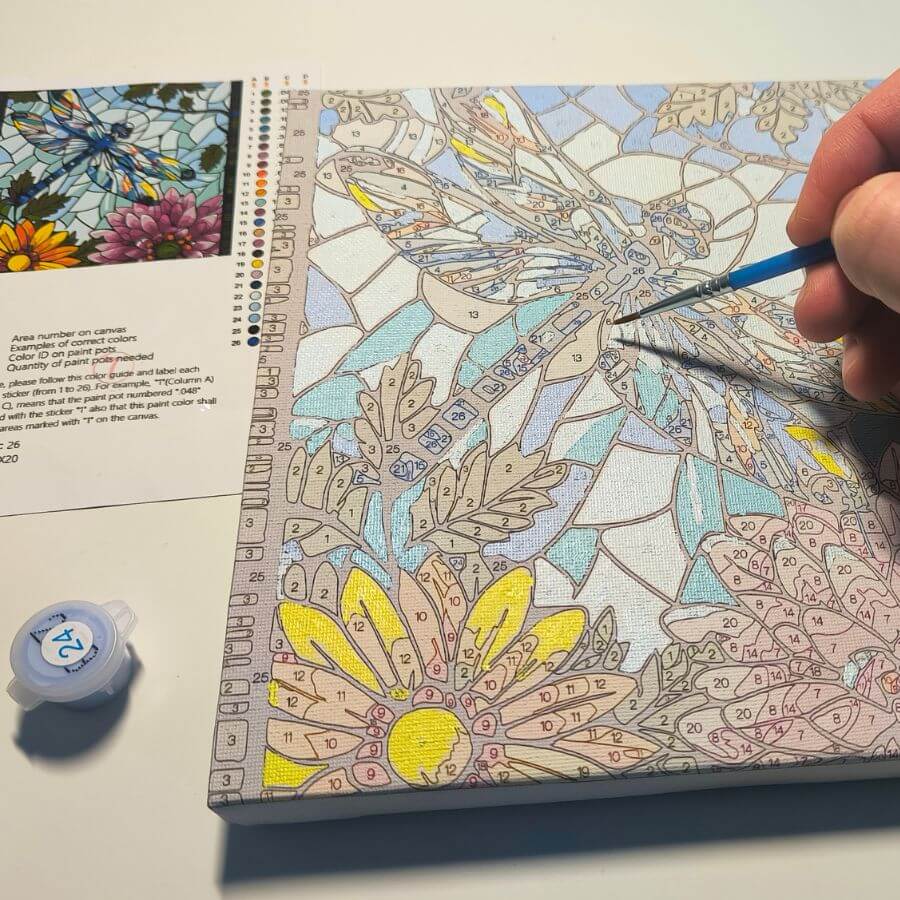
Large paint by numbers kits give detailed subjects more room and create a more noticeable finished painting. They also need more working space and often take longer to complete. The best size depends on the image, the number of small sections and where you plan to display the finished canvas.
There is no standard definition of “large” or “extra large” across paint by numbers stores. A 40 × 50 cm canvas is commonly treated as a standard size. In our current range, 50 × 65 cm is the large option and 60 × 75 cm is the largest of these rectangular formats. Compare the actual measurements instead of relying only on labels such as large or extra large.
Our paint by numbers kits for adults include simple subjects as well as highly detailed designs, so canvas size should be only one part of your decision.
What Counts as a Large Paint by Numbers Canvas?
The table compares the three rectangular formats covered in this guide.
| Listed size | Approximate size in inches | Area based on listed dimensions | Suitable for |
|---|---|---|---|
| 40 × 50 cm | 16 × 20 in | 2,000 cm² | Single subjects, simpler designs and smaller walls |
| 50 × 65 cm | 20 × 26 in | 3,250 cm² | Detailed animals, landscapes and medium-sized wall art |
| 60 × 75 cm | 24 × 30 in | 4,500 cm² | Group portraits, complex scenes and prominent wall displays |
The difference is larger than it may appear from the measurements alone. A 50 × 65 cm canvas has 62.5% more surface area than a 40 × 50 cm canvas. A 60 × 75 cm canvas has 2.25 times the area of the standard format.
That does not mean the largest canvas will take exactly 2.25 times as long to paint. A spacious design with an open sky or plain background may progress faster than a smaller image filled with faces, leaves or architectural details.
If you plan to buy a separate decorative frame, confirm whether the listed size describes the printed image or the complete piece of canvas. Unpainted margins and the outer frame can increase the final dimensions.
How Should You Choose the Right Canvas Size?
Look at the image before focusing on the size label. Count the main subjects and pay attention to faces, fur, flowers, windows and other elements that need to remain recognizable.
A 40 × 50 cm canvas usually provides enough room for one person, pet, flower, building or other clear subject. It also works well when the background is simple and the composition does not contain many small objects.
The 50 × 65 cm format leaves more room for facial features, texture and background details. It is a practical middle option if you want a larger result but do not have enough working or wall space for a 60 × 75 cm canvas.
Choose 60 × 75 cm when the image contains several people or animals, a detailed background or small features that could become unclear on a smaller canvas. This size also works well on a wide wall where a standard 40 × 50 cm painting might look undersized.
The same principles apply to a custom paint by numbers. A clear photo of one person or pet can work at 40 × 50 cm. A wedding photo, family portrait or image with several animals usually benefits from 50 × 65 cm or 60 × 75 cm.
Each uploaded photo is reviewed before production, but the original image still matters. Choose a photo with good lighting, visible faces and enough contrast between the main subject and the background.
Does a Larger Canvas Make the Painting More Difficult?
Not always. The way the design is prepared matters more than its physical dimensions.
If the same image is enlarged without adding more detail, the numbered sections may become larger and easier to read. In that case, the bigger version can be more comfortable than the smaller one.
The additional space can also be used to preserve finer details. Such a design may contain more sections, gradual shading and smaller changes in color. It will take longer even though important parts of the image remain clearer than they would be on a smaller canvas.
Compare the actual designs whenever possible. A 60 × 75 cm landscape with a large sky and a simple foreground may be easier than a detailed 40 × 50 cm portrait. Canvas size alone cannot provide a reliable difficulty rating.
If you would rather learn the process through a shorter project, mini paint by numbers kits require less desk space and let you practise paint coverage before starting a full-size canvas.
Are Large Paint by Numbers Kits Suitable for Seniors?
A larger canvas can be more comfortable for seniors when the design has broad color areas and clearly printed numbers. Size alone does not guarantee better readability, however. A detailed image may use the extra space for more sections rather than larger ones.
The subject and composition matter more than choosing the largest available format. One main figure, strong contrast and a clean background are usually easier to follow than a busy scene with numerous small elements.
Good lighting and a stable working surface can also make a major difference. A magnifying lamp may help when nearby colors have similar numbers or when the design contains several small areas.
Our guide to paint by numbers for seniors explains how to choose a suitable design and prepare a comfortable painting space for an older painter.
How Long Does a Large Paint by Numbers Kit Take?
A standard 40 × 50 cm kit often takes about 20 to 40 hours of active painting. Highly detailed or custom designs may require 40 to 80 hours or more. These figures are estimates rather than fixed completion times.
Detail density often has a greater effect than the physical size. Faces, fur, foliage and detailed buildings create more slow sections than open skies or broad abstract shapes. Light colors may also need a second thin coat to cover the printed numbers.
Your working routine changes the total as well. Frequent color changes, brush cleaning and corrections slow the process. Someone who paints for 30 to 60 minutes at a time may work on the same canvas for several weeks even when the active painting time is much shorter.
The guide to how long paint by numbers takes explains why two canvases with similar dimensions can have very different completion times.
How Much Working Space Do You Need?
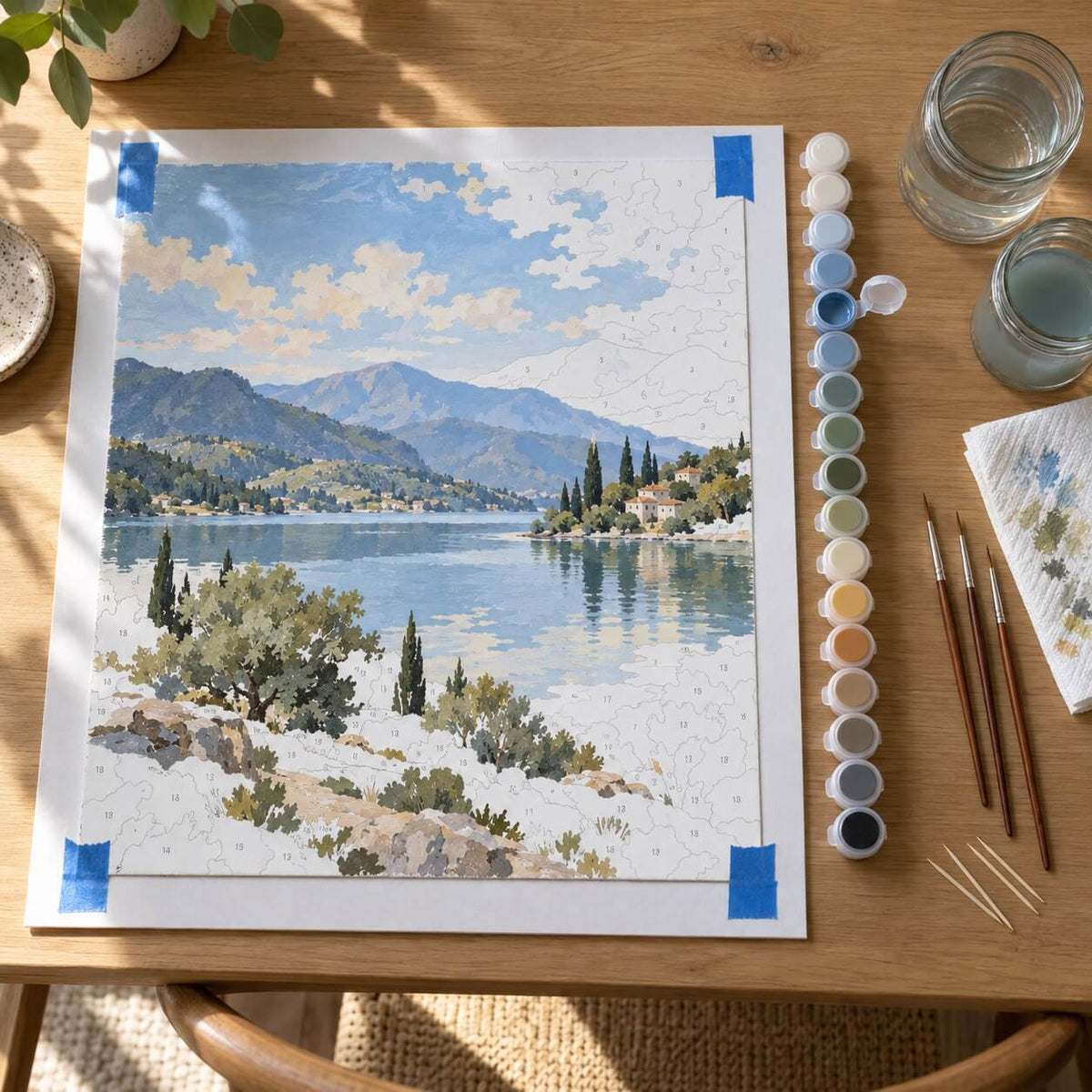
Your work surface should be larger than the canvas. You also need room for paint pots, brushes, water and the color reference sheet.
Most desks can hold a 40 × 50 cm canvas. A 50 × 65 cm canvas needs a wider surface if you want to reach every section without moving it repeatedly. A dining table, large desk or stable easel is usually more comfortable for a 60 × 75 cm kit.
You can test the size before ordering. Mark the dimensions on your table with removable tape and sit in your usual painting position. Check whether you can reach the upper corners without leaning over the canvas or placing your arm across wet paint.
Repeat the test on the wall where you plan to display the painting. A 40 × 50 cm canvas can fit above a side table or on a narrow section of wall. A 60 × 75 cm painting needs more open space around it. Remember that a decorative outer frame will increase its final dimensions.
Should You Choose a Rolled, DIY-Framed or Framed Canvas?
A rolled canvas costs less and is easier to store before painting. It needs firm support while you work, such as a drawing board or clean tabletop. Keep it flat or loosely rolled and never fold it, since deep creases can remain visible after painting.
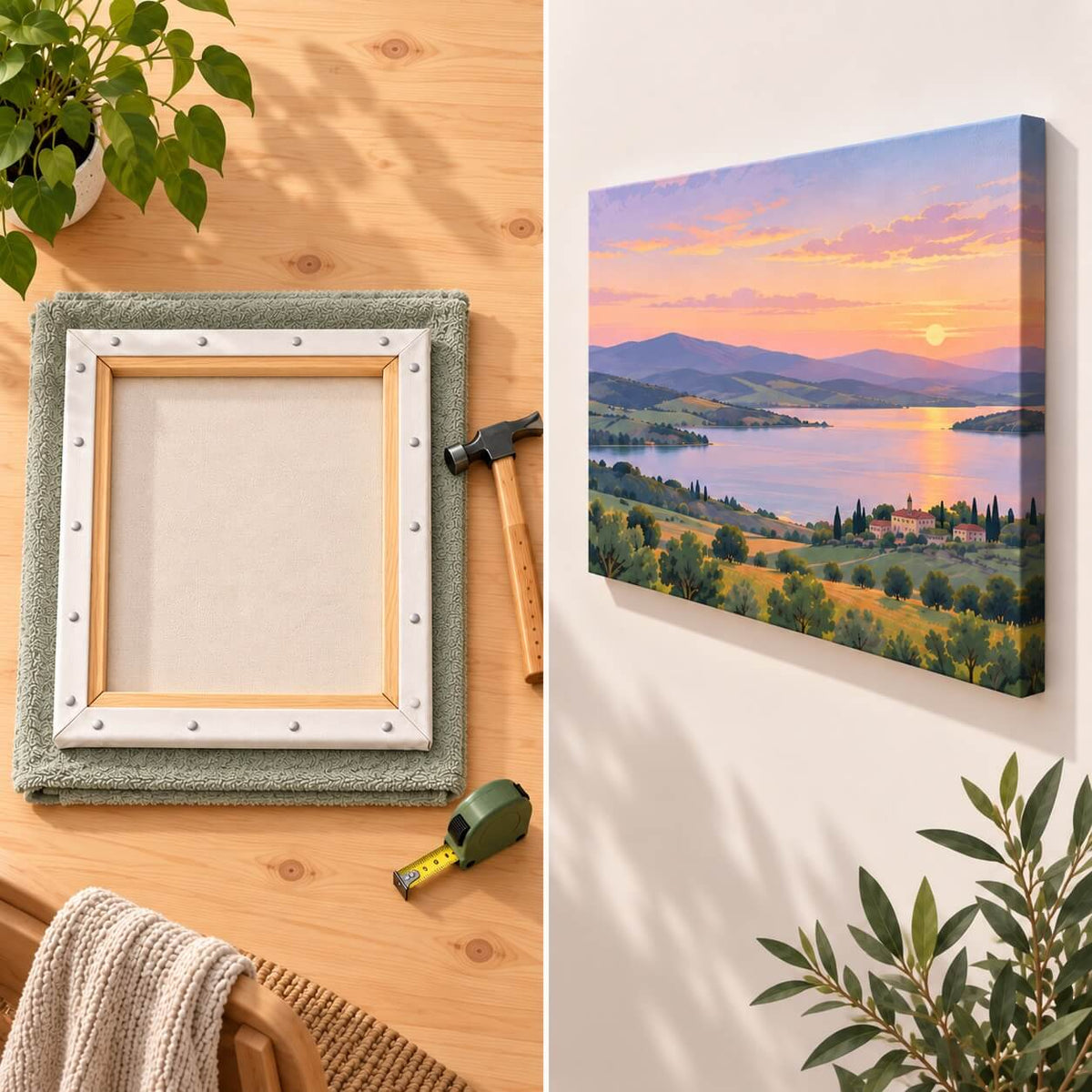
A rolled canvas with a DIY frame includes wooden stretcher bars that you assemble yourself. Position the image carefully before attaching the canvas and apply even tension on every side. Pulling one corner too tightly can shift the image or distort the fabric.
A framed canvas arrives stretched on wooden stretcher bars. It stays stable on a table or easel and does not need to be stretched after painting. Here, “framed canvas” refers to the wooden support behind the canvas. It does not mean that the kit includes an outer decorative frame.
The difference becomes more noticeable at 60 × 75 cm. A large rolled canvas can move under your hand, while a stretched canvas keeps its shape. The right option depends on your available space, budget and plans for displaying the finished painting.
How Do You Work on a Large Canvas Without Losing Track?
Painting one number across an entire 75 cm canvas can mean moving your hand back and forth over wet areas. Dividing the image into smaller working zones makes the project easier to manage.
- Place the canvas on a flat surface or stable easel.
- Divide the design into four or six working zones. Follow natural parts of the image where possible, such as the sky, foreground or one side of a portrait.
- Start near the top. Right-handed painters may find the upper-left corner more comfortable, while left-handed painters can begin on the upper-right.
- Paint matching numbers within the current zone. This limits brush cleaning without forcing you to search across the entire canvas.
- Close every paint pot as soon as you finish using it. Large projects may remain open for weeks, and acrylic paint dries quickly when left uncovered.
- Stop at a clear boundary so you can immediately see where to continue during the next session.
This method combines painting by color with working section by section. It also reduces missed numbers and lowers the risk of dragging your hand through fresh paint.
Which Subjects Benefit Most From a Large Canvas?
Famous paintings
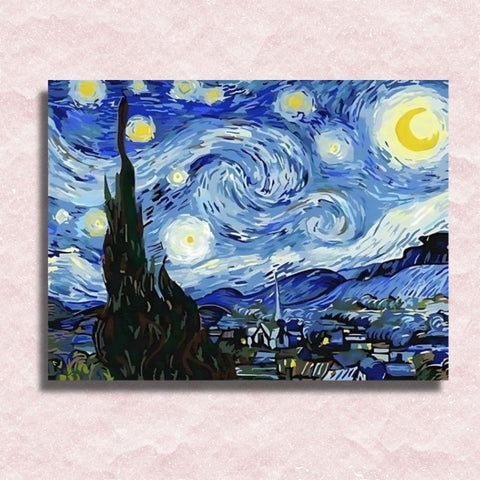
Detailed reproductions often need enough room for recognizable figures, facial features and changes in color. A simple composition may remain clear at 40 × 50 cm, but crowded interiors and paintings with several people can benefit from a larger format.
When comparing famous paint by numbers kits, look at the composition rather than choosing a size based only on the artist’s name. A well-known painting is not necessarily detailed, and a less familiar work may contain hundreds of small areas.
Landscapes
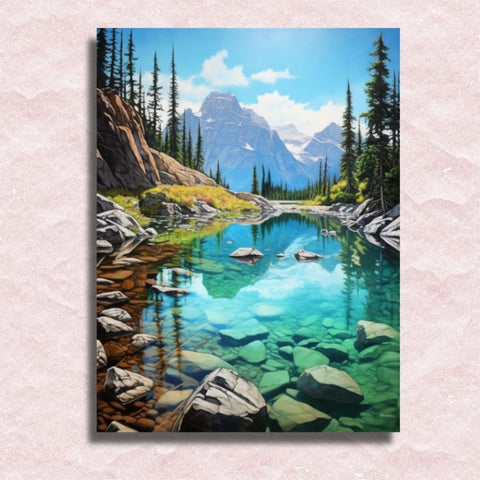
Landscapes can include foreground plants, water, buildings, mountains and distant trees within one image. A larger surface helps separate these depth levels and keeps background details visible.
Wide mountain views, coastlines and detailed villages often gain more from 50 × 65 cm or 60 × 75 cm than simple beach or sunset scenes. The landscape paint by numbers include both simple and detailed designs, so the subject category alone does not determine difficulty.
Also consider the shape of the wall. A horizontal landscape can fill the space above a sofa or cabinet, while a vertical forest, lighthouse or mountain scene fits a narrower area.
Abstract designs
Abstract designs work differently. Broad shapes and strong color blocks can make a large canvas relatively quick to paint, while mosaics and repeated decorative patterns may contain hundreds of small sections.
Review the specific abstract paint by numbers kits instead of assuming that every abstract image is easy. The amount of detail matters more than whether the subject is realistic or abstract.
What Comes With a Large Paint by Numbers Kit?
A larger size does not change the basic contents. A standard kit includes one numbered canvas, matched acrylic paints, three brushes and a color reference sheet.
The selected variant determines whether the canvas arrives rolled, with a DIY frame or already stretched on wooden bars.
You do not need specialist equipment to start, although a desk lamp can help with small numbers and similar shades. A slightly wider brush may save time on open backgrounds, but thin coats are easier to control and dry more evenly.
Frequently Asked Questions
Is 40 × 50 cm considered a large paint by numbers canvas?
A 40 × 50 cm or 16 × 20 inch canvas is commonly treated as a standard paint by numbers size. Some stores describe it as large, so compare the actual measurements instead of relying only on the label.
What size is considered extra large for paint by numbers?
There is no universal definition. In our current range, 60 × 75 cm or approximately 24 × 30 inches is the largest of the three rectangular formats covered in this guide. Other stores may use “extra large” for different dimensions.
Do larger paint by numbers canvases have larger numbered sections?
Not necessarily. Enlarging the same design can make the sections and numbers easier to see. A larger canvas may instead use the additional space for more detail, which can create more sections rather than larger ones.